Ingredients A-Z

Selenium

Overview

Selenium is an essential mineral that can be found naturally in water, soil and some foods. This mineral is needed in small amount despite its important role in human especially as a coenzyme for glutathione peroxidase and thioredoxin reductase which are responsible for protecting from oxidative stress and for cell growth respectively.

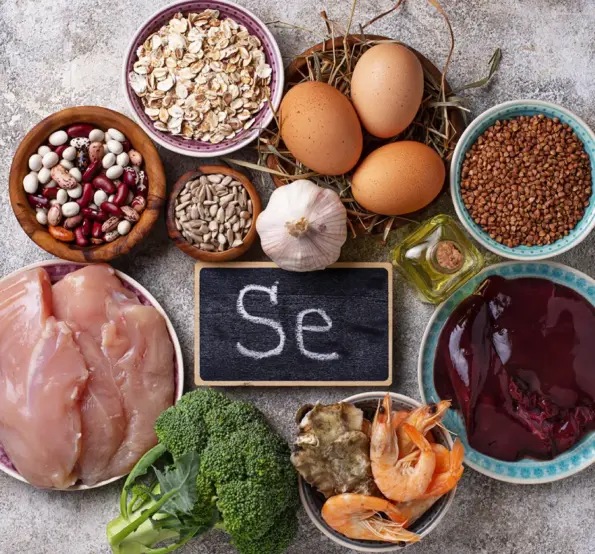
Generally, selenium can be found at especially high amount in foods such as brazil nuts, organ meats, seafoods, poultry and eggs.

Key indications

Antioxidant

Selenium acts as a cofactor of antioxidant enzymes which help to combat free radicals such as reactive oxygen species (ROS) and reactive nitrogen species (NOS) that can damage tissues and DNA, leading to inflammation and other health problems.

Nonalcoholic fatty liver disease (NAFLD)

Selenium has a very important role in liver disease because its deficiency may lead to advanced liver fibrosis and hepatocellular carcinoma (HCC). Study shows that patients with lower levels of selenium is linked to advanced liver fibrosis. Besides that, 28% lower mortality rate is observed in NAFLD patients with increased selenium levels1.

Cardiovascular disease

Selenium can help to prevent oxidation of lipids, reduce inflammation and prevent platelets from aggregating². With this action of selenium, it is suggested that selenium can help to reduce the risk of cardiovascular disease as well as its mortality rate. An inverse relationship between selenium concentrations and risk of hypertension or coronary heart disease was observed in some observational studies. This observation aligns with a meta-analysis of 25 studies which shows that people with lower selenium levels had higher risk of coronary heart disease³.

Autoimmune thyroiditis

In adults with thyroiditis, research shows that taking selenium up to 200mcg daily combined with levothyroxine reduces thyroid peroxidase antibodies by about 6%-30% after 3-12 months of treatment⁴⁻⁶.

Adverse effects

Selenium is generally safe to be taken orally at doses that do not exceed the daily tolerable upper intake level of 400mcg. Some of the common adverse effects are headache, allergic reaction, gastric discomfort, nausea and vomiting, weight loss, dermatitis and alopecia. However, if taken more than 400mcg daily, it can increase the risk of developing selenium toxicity such as severe neurological symptoms, acute respiratory distress syndrome, myocardial infarction, tremors, light-headedness, facial flushing, kidney failure, cardiac failure, and rarely, death⁷.

Dosage range

The recommended dietary allowance of selenium is as below¹⁰:


Age Male Female Pregnancy Lactation
0–6 months 15 mcg 15 mcg
7–12 months 20 mcg 20 mcg
1–3 years 20 mcg 20 mcg
4–8 years 30 mcg 30 mcg
9–13 years 40 mcg 40 mcg
14–18 years 55 mcg 55 mcg 60 mcg 70 mcg
19–50 years 55 mcg 55 mcg 60 mcg 70 mcg
51 years & above 55 mcg 55 mcg

Common doses in dietary supplements range from 50 to 200 mcg daily with a daily tolerable upper intake level of 400 mcg.

Contraindications/cautions

  • Anticoagulant or antiplatelet drugs − Selenium may have antiplatelet effects and may increase the risk of bleeding if used with anticoagulant or antiplatelet drugs. Study shows that selenium at a dose of 10mcg/kg/day can prolong bleeding by increasing prostacyclin production, which inhibits platelet activity⁸.


  • Barbiturates – Selenium might increase the duration of sedating effects of barbiturates as study suggests that selenium might inhibit the hepatic metabolism of barbiturates⁹.

Adverse effects

Selenium is generally safe to be taken orally at doses that do not exceed the daily tolerable upper intake level of 400mcg. Some of the common adverse effects are headache, allergic reaction, gastric discomfort, nausea and vomiting, weight loss, dermatitis and alopecia. However, if taken more than 400mcg daily, it can increase the risk of developing selenium toxicity such as severe neurological symptoms, acute respiratory distress syndrome, myocardial infarction, tremors, light-headedness, facial flushing, kidney failure, cardiac failure, and rarely, death⁷.

Dosage range

The recommended dietary allowance of selenium is as below¹⁰:


Age Male Female Pregnancy Lactation
0–6 months 15 mcg 15 mcg
7–12 months 20 mcg 20 mcg
1–3 years 20 mcg 20 mcg
4–8 years 30 mcg 30 mcg
9–13 years 40 mcg 40 mcg
14–18 years 55 mcg 55 mcg 60 mcg 70 mcg
19–50 years 55 mcg 55 mcg 60 mcg 70 mcg
51 years & above 55 mcg 55 mcg

Common doses in dietary supplements range from 50 to 200 mcg daily with a daily tolerable upper intake level of 400 mcg.

Contraindications/cautions

  • Anticoagulant or antiplatelet drugs − Selenium may have antiplatelet effects and may increase the risk of bleeding if used with anticoagulant or antiplatelet drugs. Study shows that selenium at a dose of 10mcg/kg/day can prolong bleeding by increasing prostacyclin production, which inhibits platelet activity⁸.


  • Barbiturates – Selenium might increase the duration of sedating effects of barbiturates as study suggests that selenium might inhibit the hepatic metabolism of barbiturates⁹.

References :

  1. Reja M, Makar M, Visaria A, Marino D, Rustgi V. (2020). Increased serum selenium levels are associated with reduced risk of advanced liver fibrosis and all-cause mortality in NAFLD patients: National Health and Nutrition Examination Survey (NHANES) III. Annals of Hepatology, 19(6), 635–640. https://doi.org/10.1016/j.aohep.2020.07.006
  2. Rayman MP. (2012). Selenium and human health. Lancet, 379(9822), 1256–1268. https://doi.org/10.1016/S0140-6736(11)61452-9
  3. Flores-Mateo G, Navas-Acien A, Pastor-Barriuso R, Guallar E. (2006). Selenium and coronary heart disease: a meta-analysis. The American Journal of Clinical Nutrition, 84(4), 762–773. https://doi.org/10.1093/ajcn/84.4.762
  4. Gärtner R, Gasnier BC. (2003). Selenium in the treatment of autoimmune thyroiditis. BioFactors, 19(3–4), 165–170. https://doi.org/10.1002/biof.5520190309
  5. Duntas LH, Mantzou E, Koutras DA. (2003). Effects of a six month treatment with selenomethionine in patients with autoimmune thyroiditis. European Journal of Endocrinology, 148(4), 389–393. https://doi.org/10.1530/eje.0.1480389
  6. Mazokopakis EE, Papadakis JA, Papadomanolaki MG, Batistakis AG, Giannakopoulos TG, Protopapadakis EE, Ganotakis ES. (2007). Effects of 12 months treatment with L-selenomethionine on serum anti-TPO levels in patients with Hashimoto’s thyroiditis. Thyroid, 17(7), 609–612. https://doi.org/10.1089/thy.2007.0040
  7. National Research Council (US) Subcommittee on Selenium. (1983). Selenium in Nutrition: Revised Edition. National Academies Press (US).

References :

  1. Reja M, Makar M, Visaria A, Marino D, Rustgi V. (2020). Increased serum selenium levels are associated with reduced risk of advanced liver fibrosis and all-cause mortality in NAFLD patients: National Health and Nutrition Examination Survey (NHANES) III. Annals of Hepatology, 19(6), 635–640. https://doi.org/10.1016/j.aohep.2020.07.006
  2. Rayman MP. (2012). Selenium and human health. Lancet, 379(9822), 1256–1268. https://doi.org/10.1016/S0140-6736(11)61452-9
  3. Flores-Mateo G, Navas-Acien A, Pastor-Barriuso R, Guallar E. (2006). Selenium and coronary heart disease: a meta-analysis. The American Journal of Clinical Nutrition, 84(4), 762–773. https://doi.org/10.1093/ajcn/84.4.762
  4. Gärtner R, Gasnier BC. (2003). Selenium in the treatment of autoimmune thyroiditis. BioFactors, 19(3–4), 165–170. https://doi.org/10.1002/biof.5520190309
  5. Duntas LH, Mantzou E, Koutras DA. (2003). Effects of a six month treatment with selenomethionine in patients with autoimmune thyroiditis. European Journal of Endocrinology, 148(4), 389–393. https://doi.org/10.1530/eje.0.1480389
  6. Mazokopakis EE, Papadakis JA, Papadomanolaki MG, Batistakis AG, Giannakopoulos TG, Protopapadakis EE, Ganotakis ES. (2007). Effects of 12 months treatment with L-selenomethionine on serum anti-TPO levels in patients with Hashimoto’s thyroiditis. Thyroid, 17(7), 609–612. https://doi.org/10.1089/thy.2007.0040
  7. National Research Council (US) Subcommittee on Selenium. (1983). Selenium in Nutrition: Revised Edition. National Academies Press (US).

The material is prepared for informational purposes only and should not be construed as a piece of personal medical advice. Owing to each person’s varying health needs, a physician should be consulted before acting on any information provided in this material. Although every effort is made to ensure that this material is accurate, it is compiled for internal use only and should not be considered definitive. Neither VitaHealth nor its employees, or information providers shall be responsible or liable for any errors, inaccuracies, or other defects in the information contained in this publication.

You might also be interested in

Ziziphus Jujuba

Ziziphus jujuba is the scientific name for jujube or jujuba. It’s more commonly known as a red date, Chinese date, or Chinese Jujube. Ziziphus jujuba

READ MORE

Zinc

Zinc is an essential micronutrient for the proper functioning of several processes in the human body. It is the second most abundant trace element in

READ MORE

Zeaxanthin

Zeaxanthin is a yellow pigment that predominantly accumulates in the retina of the eyes and naturally occurred in plants such as marigold flower. The concentration

READ MORE
My Cart
Close Wishlist
Close Recently Viewed
Categories