Ingredients A-Z

Evening Primrose Oil

Overview

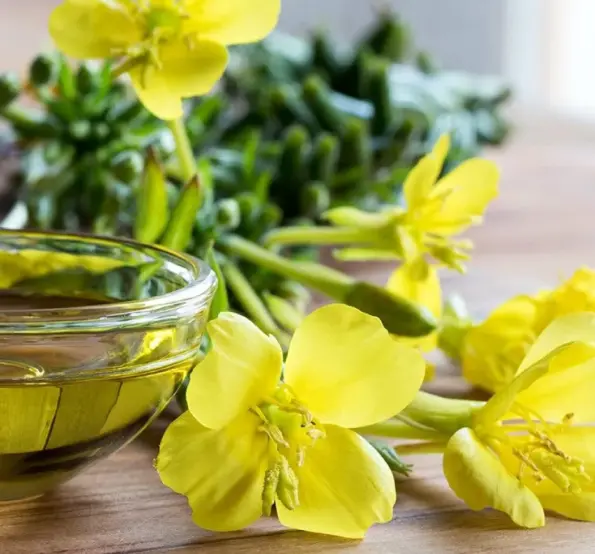
Evening primrose, Oenothera biennis was first grown by North American Indians², is a plant native to North and South America grows throughout Europe and some parts of Asia¹. It is being named O. biennis as its yellow flowers bloom in the evening³. In the 17ᵗʰ century, it was well-known as “King’s cure-all” folk remedy in Europe²⁰.


The oil extracted from evening primrose oil (EPO) seeds is rich in omega-6 fatty acids, include gamma-linolenic acid (GLA)¹. Further to its rich source of GLA, EPO has been shown to beneficial to multiple health effects like systemic diseases marked by chronic inflammation includes atopic dermatitis, rheumatoid arthritis and women’s hormonal associated symptoms such as premenstrual and menopausal syndrome, breast pain (mastalgia), hot flush and  pre-eclampsia.

Key indications

Premenstrual syndrome (PMS)

GLA an dihomo-gamma linolenic acid (DGLA) are the precursors of prostaglandin E1 (PGE1), imbalance between PGE1 and dopamine level is associated with the psychological symptoms in PMS²⁰. In a randomised double-blind placebo controlled parallel design, patients in GLA group had increased GLA and DGLA in plasma phospholipids compared to the placebo group. This is followed by the improvement in severity and duration of PMS in physical, mental and social as well as irritability¹¹. This is further confirmed in another study where the PMS severity scores was significantly improved after consumption of EPO¹².

Mastalgia

Breast pain is commonly affecting 70% of ladies in reproductive age. Cyclical breast pain occurs when there is a change in hormone during menstrual¹³. Shortage of GLA or its derivatives makes breast tissues sensitive to sex hormones which are associated with breast pain¹⁴. Studies shown severity of pain was significantly reduced after taking EPO for a month¹⁵.

Hot flash

In a randomised, double-blind placebo-controlled trial, significant improvement in hot flash severity as measured by hot flash related daily interference scale (HFRDIS) and social activities, sexuality and relation with others were observed among menopausal women after 6 weeks of EPO administration¹⁶.

Anti-coagulant

Preliminary finding shown that EPO may reduce platelet aggregation and lengthen bleeding time⁴⁻⁵. This could be explained by the presence of DGLA, a precursor of PGE1⁶.

Premenstrual syndrome (PMS)

GLA an dihomo-gamma linolenic acid (DGLA) are the precursors of prostaglandin E1 (PGE1), imbalance between PGE1 and dopamine level is associated with the psychological symptoms in PMS²⁰. In a randomised double-blind placebo controlled parallel design, patients in GLA group had increased GLA and DGLA in plasma phospholipids compared to the placebo group. This is followed by the improvement in severity and duration of PMS in physical, mental and social as well as irritability¹¹. This is further confirmed in another study where the PMS severity scores was significantly improved after consumption of EPO¹².

Mastalgia

Breast pain is commonly affecting 70% of ladies in reproductive age. Cyclical breast pain occurs when there is a change in hormone during menstrual¹³. Shortage of GLA or its derivatives makes breast tissues sensitive to sex hormones which are associated with breast pain¹⁴. Studies shown severity of pain was significantly reduced after taking EPO for a month¹⁵.

Hot flash

In a randomised, double-blind placebo-controlled trial, significant improvement in hot flash severity as measured by hot flash related daily interference scale (HFRDIS) and social activities, sexuality and relation with others were observed among menopausal women after 6 weeks of EPO administration¹⁶.

Anti-coagulant

Preliminary finding shown that EPO may reduce platelet aggregation and lengthen bleeding time⁴⁻⁵. This could be explained by the presence of DGLA, a precursor of PGE1⁶.

Anti-inflammation and atopic dermatitis

GLA is regarded as the primary active component of evening primrose with role in anti-inflammatory effects. It suppressed production of interleukin-1-beta (IL-1-beta) which may be involved in inflammatory diseases include rheumatoid arthritis⁷. GLA is breakdown into DGLA, the precursor of PGE1 that inhibits inflammatory polymorphonuclear leukocyte cells. Besides, GLA may act competitively to inhibit pro-inflammatory 2-series prostaglandins production. DGLA is then converted to 15-hydroxy-DGLA that prevents conversion of arachidonic acid to inflammatory leukotrienes. Both GLA and DGLA are believed to improve the ratio of inflammatory and non-inflammatory prostaglandins and leukotrienes⁸⁻¹⁰. In a 12-week continuous parallel double-blind, randomised placebo-controlled trial, all clinical parameters such as overall severity and grade of inflammation, dryness, itch, and reduction surface area significantly improved in moderate-to-severe atopic dermatitis patients after taking EPO¹⁷.

Adverse effects²,¹⁸

EPO is generally well tolerated for adults, with reported minor adverse effects include temporary gastrointestinal effects such as indigestion, abdominal pain, fullness, nausea, softening of stool, rise in temperature, hypersensitive reactions like exanthema and headache.

Dosage range

Typical doses used in clinical trials is ranging from 2g to 6g daily.

Contraindications/cautions¹⁸⁻¹⁹

Interaction may occur with these drugs and supplements:


  • Aluminium: containing antacids:
    EPO may increase effects of the drug
  •  

  • Anti-coagulant/ anti-platelet drugs, herbs and supplements
    EPO may have anti-platelet effects and increase the bleeding risk when used in combination
  •  

  • Cytochrome P450 2C9 (CYP2C9) substrates
    EPO may intensify the levels and clinical effects of CYP2C9 substrates
  •  

  • Lithium
    Concomitant use of lithium with EPO might lower lithium levels and effects
  •  

  • Phenothiazines
    Risk of convulsions increases when combined both EPO and phenothiazines
  •  

    Safety data on pregnancy and lactation has not beenestablished.

    Adverse effects²,¹⁸

    EPO is generally well tolerated for adults, with reported minor adverse effects include temporary gastrointestinal effects such as indigestion, abdominal pain, fullness, nausea, softening of stool, rise in temperature, hypersensitive reactions like exanthema and headache.

    Dosage range

    Typical doses used in clinical trials is ranging from 2g to 6g daily.

    Contraindications/cautions¹⁸⁻¹⁹

    Interaction may occur with these drugs and supplements:


  • Aluminium: containing antacids:
    EPO may increase effects of the drug
  •  

  • Anti-coagulant/ anti-platelet drugs, herbs and supplements
    EPO may have anti-platelet effects and increase the bleeding risk when used in combination
  •  

  • Cytochrome P450 2C9 (CYP2C9) substrates
    EPO may intensify the levels and clinical effects of CYP2C9 substrates
  •  

  • Lithium
    Concomitant use of lithium with EPO might lower lithium levels and effects
  •  

  • Phenothiazines
    Risk of convulsions increases when combined both EPO and phenothiazines
  •  

    Safety data on pregnancy and lactation has not beenestablished.

    References :

    1. Bayles, B. & Usatine, R. (2009). Evening primrose oil. American family physician, 80(12), 1405–1408.
    2. European Medicines Agency. (2018). Assessment report on Oenothera biennis L. or Oenothera lamarckiana L., oleum. EMA/HMPC/753042/2017, 1-49.
    3. Barrett, M. (2004). The handbook of clinically tested herbal remedies. Bir¬mingham (NY): The Haworth Herbal Press®.
    4. Wedig, K. E. & Whitsett, J. A. (2008). Down the primrose path: petechiae in a neonate exposed to herbal remedy for parturition. J Pediatr, 152:140, 140.e1.
    5. Guivernau, M., Meza, N., Barja, P., Roman, O. (1994). Clinical and experimental study on the long-term effect of dietary gamma-linolenic acid on plasma lipids, platelet aggregation, thromboxane formation, and prostacyclin production. Prostaglandins Leukot Essent Fatty Acids, 51:311-6.
    6. Wedig, K. E. & Whitsett, J. A. (2008). Down the primrose path: petechiae in a neonate exposed to herbal remedy for parturition. J Pediatr, 152:140, 140.e1.
    7. Furse, R. K., Rossetti, R. G., Seiler, C. M., Zurier R. B. (2002). Oral administration of gammalinolenic acid, an unsaturated fatty acid with anti-inflammatory properties, modulates interleukin-1beta production by human monocytes. J Clin Immunol, 22:83-91.
    8. Morse, P. F., Horrobin, D. F., Manku, M. S., et al. (1989). Meta-analysis of placebo-controlled studies of the efficacy of Epogam in the treatment of atopic eczema. Relationship between plasma essential fatty acid changes and clinical response. Br J Dermatol, 121:75-90.
    9. Belch, J. & Hill, A. (2000). Evening primrose oil and borage oil in rheumatologic conditions. Am J Clin Nutr, 71:352S-6S.
    10. Joe, L. A. & Hart, L. L. (1993). Evening primrose oil in rheumatoid arthritis. Ann. Pharmacother, 27(12):1475-1477.
    11. Watanabe, S., Sakurada, M., Tsuji, H., Matsumoto, S., Kondo, K. (2005). Ef¬ficacy of γ-linolenic acid for treatment of premenstrual syndrome, as assessed by a prospective daily rating system. J Oleo Sci, 54: 217-24.
    12. Saki, M., Akbari, S., Saki, M., Tarrahi, M. J., Gholami, M., Pirdadeh, S. (2015). The effect of primrose oil on the premenstrual syndrome among the female students in Lorestan University of Medical Sciences: a triple blind study. J Nurs Midwifery Sci, 2:20-6.
    13. Gautam, S., Srivastava, A., Kataria, K., Dhar, A., Ranjan, P., Kumar, J. (2016). New breast pain chart for objective record of mastalgia. Indian J Surg,78: 245-8.
    14. Graham, J., Franks, S., Bonney, R. C. (1994). In vivo and in vitro effects of gamma-linolenic acid and eicosapentaenoic acid on prostaglandin production and arachidonic acid uptake by human endometrium. Prostaglandins Leukot Essent Fatty Acids, 50:321-9.
    15. Fathizadeh, N., Takfallah, L., Ehsanpour, S., Namnabati, M., Askari, S. (2009). Effects of evening primrose oil and vitamin E on the severity of periodical breast pain. Iran J Nurs Midwifery Res, 13: 90-3.
    16. Farzaneh, F., Fatehi, S., Sohrabi, M. R., Alizadeh, K. (2013). The effect of oral evening primrose oil on menopausal hot flashes: a randomized clinical trial. Arch Gynecol Obstet, 288: 1075-9.
    17. Schalin-Karrila, M., Mattila, L., Jansen, C. T., & Uotila, P. (1987). Evening primrose oil in the treatment of atopic eczema: effect on clinical status, plasma phospholipid fatty acids and circulating blood prostaglandins. The British journal of dermatology, 117(1), 11–19. https://doi.org/10.1111/j.1365-2133.1987.tb04085.x
    18. National Center for Complementary and Integrative Health. (2022). Evening Primrose Oil. Retrieved from https://www.nccih.nih.gov/health/evening-primrose-oil
    19. Therapeutic Research Centre. (2022). Evening primrose. Retrieved from https://naturalmedicines.therapeuticresearch.com/databases/food,-herbs-supplements/professional.aspx?productid=1006
    20. Horrobin, D. F. (1992). The relationship between schizophrenia and essential fatty acid and eicosanoid metabolism, Prostag. Leukotr. Ess., Vol. 46, 71-77.

    References :

    1. Bayles, B. & Usatine, R. (2009). Evening primrose oil. American family physician, 80(12), 1405–1408.
    2. European Medicines Agency. (2018). Assessment report on Oenothera biennis L. or Oenothera lamarckiana L., oleum. EMA/HMPC/753042/2017, 1-49.
    3. Barrett, M. (2004). The handbook of clinically tested herbal remedies. Bir¬mingham (NY): The Haworth Herbal Press®.
    4. Wedig, K. E. & Whitsett, J. A. (2008). Down the primrose path: petechiae in a neonate exposed to herbal remedy for parturition. J Pediatr, 152:140, 140.e1.
    5. Guivernau, M., Meza, N., Barja, P., Roman, O. (1994). Clinical and experimental study on the long-term effect of dietary gamma-linolenic acid on plasma lipids, platelet aggregation, thromboxane formation, and prostacyclin production. Prostaglandins Leukot Essent Fatty Acids, 51:311-6.
    6. Wedig, K. E. & Whitsett, J. A. (2008). Down the primrose path: petechiae in a neonate exposed to herbal remedy for parturition. J Pediatr, 152:140, 140.e1.
    7. Furse, R. K., Rossetti, R. G., Seiler, C. M., Zurier R. B. (2002). Oral administration of gammalinolenic acid, an unsaturated fatty acid with anti-inflammatory properties, modulates interleukin-1beta production by human monocytes. J Clin Immunol, 22:83-91.
    8. Morse, P. F., Horrobin, D. F., Manku, M. S., et al. (1989). Meta-analysis of placebo-controlled studies of the efficacy of Epogam in the treatment of atopic eczema. Relationship between plasma essential fatty acid changes and clinical response. Br J Dermatol, 121:75-90.
    9. Belch, J. & Hill, A. (2000). Evening primrose oil and borage oil in rheumatologic conditions. Am J Clin Nutr, 71:352S-6S.
    10. Joe, L. A. & Hart, L. L. (1993). Evening primrose oil in rheumatoid arthritis. Ann. Pharmacother, 27(12):1475-1477.
    11. Watanabe, S., Sakurada, M., Tsuji, H., Matsumoto, S., Kondo, K. (2005). Ef¬ficacy of γ-linolenic acid for treatment of premenstrual syndrome, as assessed by a prospective daily rating system. J Oleo Sci, 54: 217-24.
    12. Saki, M., Akbari, S., Saki, M., Tarrahi, M. J., Gholami, M., Pirdadeh, S. (2015). The effect of primrose oil on the premenstrual syndrome among the female students in Lorestan University of Medical Sciences: a triple blind study. J Nurs Midwifery Sci, 2:20-6.
    13. Gautam, S., Srivastava, A., Kataria, K., Dhar, A., Ranjan, P., Kumar, J. (2016). New breast pain chart for objective record of mastalgia. Indian J Surg,78: 245-8.
    14. Graham, J., Franks, S., Bonney, R. C. (1994). In vivo and in vitro effects of gamma-linolenic acid and eicosapentaenoic acid on prostaglandin production and arachidonic acid uptake by human endometrium. Prostaglandins Leukot Essent Fatty Acids, 50:321-9.
    15. Fathizadeh, N., Takfallah, L., Ehsanpour, S., Namnabati, M., Askari, S. (2009). Effects of evening primrose oil and vitamin E on the severity of periodical breast pain. Iran J Nurs Midwifery Res, 13: 90-3.
    16. Farzaneh, F., Fatehi, S., Sohrabi, M. R., Alizadeh, K. (2013). The effect of oral evening primrose oil on menopausal hot flashes: a randomized clinical trial. Arch Gynecol Obstet, 288: 1075-9.
    17. Schalin-Karrila, M., Mattila, L., Jansen, C. T., & Uotila, P. (1987). Evening primrose oil in the treatment of atopic eczema: effect on clinical status, plasma phospholipid fatty acids and circulating blood prostaglandins. The British journal of dermatology, 117(1), 11–19. https://doi.org/10.1111/j.1365-2133.1987.tb04085.x
    18. National Center for Complementary and Integrative Health. (2022). Evening Primrose Oil. Retrieved from https://www.nccih.nih.gov/health/evening-primrose-oil
    19. Therapeutic Research Centre. (2022). Evening primrose. Retrieved from https://naturalmedicines.therapeuticresearch.com/databases/food,-herbs-supplements/professional.aspx?productid=1006
    20. Horrobin, D. F. (1992). The relationship between schizophrenia and essential fatty acid and eicosanoid metabolism, Prostag. Leukotr. Ess., Vol. 46, 71-77.

    The material is prepared for informational purposes only and should not be construed as a piece of personal medical advice. Owing to each person’s varying health needs, a physician should be consulted before acting on any information provided in this material. Although every effort is made to ensure that this material is accurate, it is compiled for internal use only and should not be considered definitive. Neither VitaHealth nor its employees, or information providers shall be responsible or liable for any errors, inaccuracies, or other defects in the information contained in this publication.

    You might also be interested in

    Evening Primrose Oil

    Evening primrose, Oenothera biennis was first grown by North American Indians², is a plant native to North and South America grows throughout Europe and some

    READ MORE

    Elderberry Extract

    Elderberry also known as Sambucus nigra L. extract is widely recognised for its high content of bioactive compounds, particularly polyphenols such as anthocyanins, flavonols (quercetin,

    READ MORE

    Cordyceps

    Cordyceps sinensis, also known as Chinese caterpillar fungus, has a long history used as a traditional Chinese medicine since the 15ᵗʰ century. Its name is

    READ MORE
    My Cart
    Close Wishlist
    Close Recently Viewed
    Categories