Ingredients A-Z

Elderberry Extract

Overview

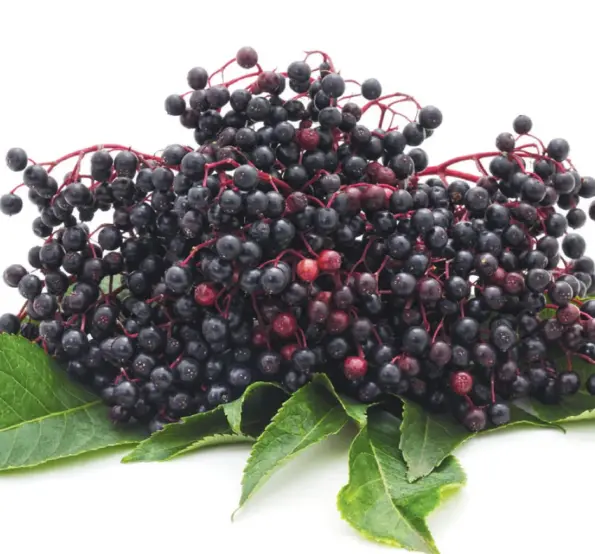
Elderberry also known as Sambucus nigra L. extract is widely recognised for its high content of bioactive compounds, particularly polyphenols such as anthocyanins, flavonols (quercetin, kaempferol, isorhamnetin), phenolic acids, and terpenoids. Anthocyanins alone account for approximately 80% of the total polyphenol content, contributing significantly to the extract’s strong antioxidant and anti-inflammatory activities. Strong in antiviral, antimicrobial, cardiovascular, and immune-boosting benefits.


The effectiveness of elderberry can vary depending on processing methods and the quality of raw ingredients. To ensure consistency and potency, it is important to choose elderberry products made with high-quality, standardised extracts.

Key indications

Viral Respiratory Illness

A systematic review of 1,187 records, including five randomised trials, found that elderberry may reduce the duration and severity of colds and influenza, and could be linked to fewer complications of influenza¹. A study involving 312 participants found that supplementation with 300mg proprietary elderberry extract capsules, taken 2 to 3 times per day, significantly reduced cold symptoms and shortened the duration by about two days (mean of 4.75 days vs. 6.88 days)². Additionally, a previous study found that 15ml of elderberry syrup (38% extract) taken four times a day for 5 to 6 days reduced the duration of symptoms in patients with influenza A or B3. In a recent study, elderberry extract has been clinically proven to support immune health by stimulating and supporting healthy immune responses, preventing viral infection by blocking its receptor and preventing viral replication in cells of SARS-CoV-24.

Cardiovascular Disease

Many studies indicate that elderberry components may help lower blood pressure, reduce oxidative stress, and enhance the activity of antioxidant enzymes in blood plasma, including glutathione⁵⁻⁷. A research study administered an extract from Sambucus nigra L. fruit at a dose of 0.045g/kg body weight orally (via tube feeding) every two days for eight weeks. Supplementation with Sambucus nigra L. fruit extract may help reduce endothelial dysfunction and enhance myocardial perfusion, offering potential cardiovascular benefits in the early stages of hypertension⁵.

Insulin Resistance

A study found that elderberry extract increased glucose uptake in both normal and insulin-resistant fat cells and boosted GLUT-4 gene expression in insulin-resistant cells, suggesting it may have insulin-like and insulin sensitizing effects⁸. A 4-week supplementation with 190mg/kg/day of lipophilic elderberry extract and 350mg/kg/day of polar extract improved glucose metabolism by reducing insulin resistance, lowering insulin secretion, and correcting hyperglycemia without affecting blood lipids or trace element balance⁹.

Digestive Issues

One study showed significant results of improved gut health after participants took 300mg of elderberry extract twice daily for six weeks, leading to increased microbial diversity and higher levels of Akkermansia muciniphila, a beneficial gut bacterium linked to better metabolic and immune health. These results support the prebiotic potential of elderberry extract and its emerging role in supporting gut and immune function, with no adverse events reported¹⁰.

Viral Respiratory Illness

A systematic review of 1,187 records, including five randomised trials, found that elderberry may reduce the duration and severity of colds and influenza, and could be linked to fewer complications of influenza¹. A study involving 312 participants found that supplementation with 300mg proprietary elderberry extract capsules, taken 2 to 3 times per day, significantly reduced cold symptoms and shortened the duration by about two days (mean of 4.75 days vs. 6.88 days)². Additionally, a previous study found that 15ml of elderberry syrup (38% extract) taken four times a day for 5 to 6 days reduced the duration of symptoms in patients with influenza A or B3. In a recent study, elderberry extract has been clinically proven to support immune health by stimulating and supporting healthy immune responses, preventing viral infection by blocking its receptor and preventing viral replication in cells of SARS-CoV-24.

Cardiovascular Disease

Many studies indicate that elderberry components may help lower blood pressure, reduce oxidative stress, and enhance the activity of antioxidant enzymes in blood plasma, including glutathione⁵⁻⁷. A research study administered an extract from Sambucus nigra L. fruit at a dose of 0.045g/kg body weight orally (via tube feeding) every two days for eight weeks. Supplementation with Sambucus nigra L. fruit extract may help reduce endothelial dysfunction and enhance myocardial perfusion, offering potential cardiovascular benefits in the early stages of hypertension⁵.

Insulin Resistance

A study found that elderberry extract increased glucose uptake in both normal and insulin-resistant fat cells and boosted GLUT-4 gene expression in insulin-resistant cells, suggesting it may have insulin-like and insulin sensitizing effects⁸. A 4-week supplementation with 190mg/kg/day of lipophilic elderberry extract and 350mg/kg/day of polar extract improved glucose metabolism by reducing insulin resistance, lowering insulin secretion, and correcting hyperglycemia without affecting blood lipids or trace element balance⁹.

Digestive Issues

One study showed significant results of improved gut health after participants took 300mg of elderberry extract twice daily for six weeks, leading to increased microbial diversity and higher levels of Akkermansia muciniphila, a beneficial gut bacterium linked to better metabolic and immune health. These results support the prebiotic potential of elderberry extract and its emerging role in supporting gut and immune function, with no adverse events reported¹⁰.

Adverse effects

Elderberry is generally considered as safe for consumption when prepared and use properly. Raw or unripe elderberries, leaves or stems contain toxic compounds. However, elderberry is typically consumed in processed form, where thermal treatment breaks down sambunigrin, preventing poisoning symptoms. Common side effects include stomach cramps, nausea, vomiting, diarrhea, and a runny nose, while serious effects like numbness, weakness, dizziness, or confusion require immediate medical attention¹¹,¹².

Dosage range

Most studies administer elderberry in the form of lozenges, capsules, syrups, or juices, with doses ranging from 175mg to 900mg per day (15ml to 177ml in liquid form), typically for treatment periods of 48 hours to four weeks, and up to 12 weeks for prevention¹⁴.

Contraindications/cautions

Elderberry may interact with certain conditions or medications¹³:


  • Diuretics (water pills):
    Elderberry may have a diuretic effect, potentially increasing the risk of dehydration when combine with these drugs. Examples include hydrochlorothiazide, bumetanide, furosemide, amiloride, and metolazone.
  •  

  • Diabetes medications:
    Elderberry may lower blood sugar, increasing the risk of hypoglycemia if combine with diabetes drugs.
  •  

  • Chemotherapy:
    Elderberry could interact with chemotherapy drugs, so speak with your oncologist before taking it.
  •  

  • Laxatives:
    Since elderberry may act as a laxative, it shouldn’t be used with other laxatives.
  •  

  • Theophylline:
    Elderberry may reduce the effectiveness of theophylline, a medication for asthma and respiratory conditions.
  •  

  • Immunosuppressive drugs:
    Elderberry may stimulate the immune system, interfering with medications like corticosteroids or those used for autoimmune diseases. People with organ transplants should also avoid elderberry.
  • Adverse effects

    Elderberry is generally considered as safe for consumption when prepared and use properly. Raw or unripe elderberries, leaves or stems contain toxic compounds. However, elderberry is typically consumed in processed form, where thermal treatment breaks down sambunigrin, preventing poisoning symptoms. Common side effects include stomach cramps, nausea, vomiting, diarrhea, and a runny nose, while serious effects like numbness, weakness, dizziness, or confusion require immediate medical attention¹¹,¹².

    Dosage range

    Most studies administer elderberry in the form of lozenges, capsules, syrups, or juices, with doses ranging from 175mg to 900mg per day (15ml to 177ml in liquid form), typically for treatment periods of 48 hours to four weeks, and up to 12 weeks for prevention¹⁴.

    Contraindications/cautions

    Elderberry may interact with certain conditions or medications¹³:


  • Diuretics (water pills):
    Elderberry may have a diuretic effect, potentially increasing the risk of dehydration when combine with these drugs. Examples include hydrochlorothiazide, bumetanide, furosemide, amiloride, and metolazone.
  •  

  • Diabetes medications:
    Elderberry may lower blood sugar, increasing the risk of hypoglycemia if combine with diabetes drugs.
  •  

  • Chemotherapy:
    Elderberry could interact with chemotherapy drugs, so speak with your oncologist before taking it.
  •  

  • Laxatives:
    Since elderberry may act as a laxative, it shouldn’t be used with other laxatives.
  •  

  • Theophylline:
    Elderberry may reduce the effectiveness of theophylline, a medication for asthma and respiratory conditions.
  •  

  • Immunosuppressive drugs:
    Elderberry may stimulate the immune system, interfering with medications like corticosteroids or those used for autoimmune diseases. People with organ transplants should also avoid elderberry.
  • References :

    1. Wieland, L. S., Piechotta, V., Feinberg, T., Ludeman, E., Hutton, B., Kanji, S., … & Garritty, C. (2021). Elderberry for prevention and treatment of viral respiratory illnesses: A systematic review. BMC complementary medicine and therapies, 21, 1-15.
    2. Tiralongo, E., Wee, S. S., & Lea, R. A. (2016). Elderberry supplementation reduces cold duration and symptoms in air-travellers: A randomized, double-blind placebo-controlled clinical trial. Nutrients, 8(4), 182.
    3. Guo, R., Pittler, M. H., & Ernst, E. (2007). Complementary medicine for treating or preventing influenza or influenza-like illness. The American journal of medicine, 120(11), 923-929.
    4. Setz, C., Fröba, M., Große, M., Rauch, P., Auth, J., Steinkasserer, A., … & Schubert, U. (2023). European Black elderberry fruit extract inhibits replication of SARS-CoV-2 in vitro. Nutraceuticals, 3(1), 91-106.
    5. Ciocoiu, M., Serban, D., Bădescu, L., Tutunaru, D., Badulescu, O., & Bădescu, M. (2010). The effects of Sambucus nigra extract in experimental arterial hypertension. Annals of the Romanian Society for Cell Biology, 15(2), 87-92.
    6. Ciocoiu, M., Badescu, L., Badulescu, O., Tutunaru, D., & Badescu, M. (2012). PROTECTIVE INTERVENTION OF SAMBUCUS NIGRA POLYPHENOLS IN THE DIABETIC HEART. Annals of the Romanian Society for cell biology, 17(1).
    7. Ciocoiu, M., Badescu, L., Badulescu, O., & Badescu, M. (2012). Intervention of Sambucus nigra polyphenolic extract in experimental arterial hypertension. Int. J. Med. Health Sci, 6, 80-83.
    8. Zielińska-Wasielica, J., Olejnik, A., Kowalska, K., Olkowicz, M., & Dembczyński, R. (2019). Elderberry (Sambucus nigra L.) Fruit Extract Alleviates Oxidative Stress, Insulin Resistance, and Inflammation in Hypertrophied 3T3-L1 Adipocytes and Activated RAW 264.7 Macrophages. Foods (Basel, Switzerland), 8(8), 326. https://doi.org/10.3390/foods8080326
    9. Salvador, Â. C., Król, E., Lemos, V. C., Santos, S. A., Bento, F. P., Costa, C. P., … & Rocha, S. M. (2016). Effect of elderberry (Sambucus nigra L.) extract supplementation in STZ-induced diabetic rats fed with a high-fat diet. International journal of molecular sciences, 18(1), 13.
    10. Reider, S., Watschinger, C., Längle, J., Pachmann, U., Przysiecki, N., Pfister, A., … & Moschen, A. R. (2022). Short-and Long-Term Effects of a Prebiotic Intervention with Polyphenols Extracted from European Black Elderberry—Sustained Expansion of Akkermansia spp. Journal of personalized medicine, 12(9), 1479.
    11. WebMD. (n.d). Elderberry: Overview, uses, side effects, precautions, interactions, dosing and reviews. WebMD. https://www.webmd.com/vitamins/ai/ingredientmono-434/elderberry
    12. Drugs.com. (n.d.). Elderberry uses, side effects & warnings. https://www.drugs.com/mtm/elderberry.html#side-effects
    13. Mount Sinai Health System. (n.d.). Elderberry. https://www.mountsinai.org/health-library/herb/elderberry
    14. Daryl Nault. (2023). Elderberry benefits, dosage, and side effects. https://examine.com/supplements/elderberry

    References :

    1. Wieland, L. S., Piechotta, V., Feinberg, T., Ludeman, E., Hutton, B., Kanji, S., … & Garritty, C. (2021). Elderberry for prevention and treatment of viral respiratory illnesses: A systematic review. BMC complementary medicine and therapies, 21, 1-15.
    2. Tiralongo, E., Wee, S. S., & Lea, R. A. (2016). Elderberry supplementation reduces cold duration and symptoms in air-travellers: A randomized, double-blind placebo-controlled clinical trial. Nutrients, 8(4), 182.
    3. Guo, R., Pittler, M. H., & Ernst, E. (2007). Complementary medicine for treating or preventing influenza or influenza-like illness. The American journal of medicine, 120(11), 923-929.
    4. Setz, C., Fröba, M., Große, M., Rauch, P., Auth, J., Steinkasserer, A., … & Schubert, U. (2023). European Black elderberry fruit extract inhibits replication of SARS-CoV-2 in vitro. Nutraceuticals, 3(1), 91-106.
    5. Ciocoiu, M., Serban, D., Bădescu, L., Tutunaru, D., Badulescu, O., & Bădescu, M. (2010). The effects of Sambucus nigra extract in experimental arterial hypertension. Annals of the Romanian Society for Cell Biology, 15(2), 87-92.
    6. Ciocoiu, M., Badescu, L., Badulescu, O., Tutunaru, D., & Badescu, M. (2012). PROTECTIVE INTERVENTION OF SAMBUCUS NIGRA POLYPHENOLS IN THE DIABETIC HEART. Annals of the Romanian Society for cell biology, 17(1).
    7. Ciocoiu, M., Badescu, L., Badulescu, O., & Badescu, M. (2012). Intervention of Sambucus nigra polyphenolic extract in experimental arterial hypertension. Int. J. Med. Health Sci, 6, 80-83.
    8. Zielińska-Wasielica, J., Olejnik, A., Kowalska, K., Olkowicz, M., & Dembczyński, R. (2019). Elderberry (Sambucus nigra L.) Fruit Extract Alleviates Oxidative Stress, Insulin Resistance, and Inflammation in Hypertrophied 3T3-L1 Adipocytes and Activated RAW 264.7 Macrophages. Foods (Basel, Switzerland), 8(8), 326. https://doi.org/10.3390/foods8080326
    9. Salvador, Â. C., Król, E., Lemos, V. C., Santos, S. A., Bento, F. P., Costa, C. P., … & Rocha, S. M. (2016). Effect of elderberry (Sambucus nigra L.) extract supplementation in STZ-induced diabetic rats fed with a high-fat diet. International journal of molecular sciences, 18(1), 13.
    10. Reider, S., Watschinger, C., Längle, J., Pachmann, U., Przysiecki, N., Pfister, A., … & Moschen, A. R. (2022). Short-and Long-Term Effects of a Prebiotic Intervention with Polyphenols Extracted from European Black Elderberry—Sustained Expansion of Akkermansia spp. Journal of personalized medicine, 12(9), 1479.
    11. WebMD. (n.d). Elderberry: Overview, uses, side effects, precautions, interactions, dosing and reviews. WebMD. https://www.webmd.com/vitamins/ai/ingredientmono-434/elderberry
    12. Drugs.com. (n.d.). Elderberry uses, side effects & warnings. https://www.drugs.com/mtm/elderberry.html#side-effects
    13. Mount Sinai Health System. (n.d.). Elderberry. https://www.mountsinai.org/health-library/herb/elderberry
    14. Daryl Nault. (2023). Elderberry benefits, dosage, and side effects. https://examine.com/supplements/elderberry

    The material is prepared for informational purposes only and should not be construed as a piece of personal medical advice. Owing to each person’s varying health needs, a physician should be consulted before acting on any information provided in this material. Although every effort is made to ensure that this material is accurate, it is compiled for internal use only and should not be considered definitive. Neither VitaHealth nor its employees, or information providers shall be responsible or liable for any errors, inaccuracies, or other defects in the information contained in this publication.

    You might also be interested in

    Evening Primrose Oil

    Evening primrose, Oenothera biennis was first grown by North American Indians², is a plant native to North and South America grows throughout Europe and some

    READ MORE

    Elderberry Extract

    Elderberry also known as Sambucus nigra L. extract is widely recognised for its high content of bioactive compounds, particularly polyphenols such as anthocyanins, flavonols (quercetin,

    READ MORE

    Cordyceps

    Cordyceps sinensis, also known as Chinese caterpillar fungus, has a long history used as a traditional Chinese medicine since the 15ᵗʰ century. Its name is

    READ MORE
    My Cart
    Close Wishlist
    Close Recently Viewed
    Categories