


Health A-Z
Osteoporosis
Overview
- Osteoporosis is a generalised bone disease characterised by diminished bone mineral density
and bone mass with an increased risk of fractures (broken bones)¹. - Osteoporosis is a “silent” disease as there are typically no symptoms until a bone is broken².
- Fractures can occur in any bones but happen most often in bones of the hip, vertebrae in the spine, and wrist².
- It has been estimated that more than 200 million people are suffering from osteoporosis worldwide, with increasing prevalence³.
- 1 in 3 women and 1 in 5 men, over the age of 50 years, will experience osteoporosis fractures in their lifetime³.
Symptoms and Signs

Back pain, caused by a fractured or collapsed vertebrae

Loss of height over time (more than 2 inches)

Curved and stooped shape to the spine

Bone that breaks much easier than expected
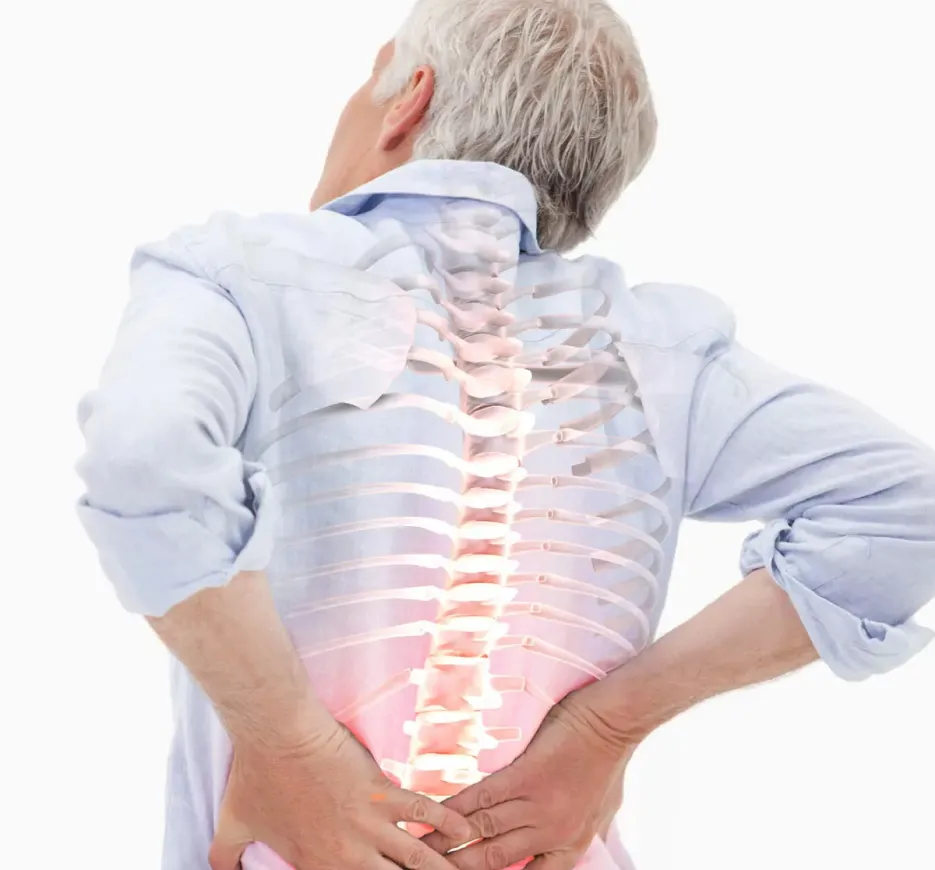
Signs and Symptoms

Back pain, caused by a fractured or collapsed vertebrae

Loss of height over time (more than 2 inches)

Curved and stooped shape to the spine

Bone that breaks much easier than expected
Causes and risk factors
- Environmental factors Noise, temperature changes or excessive light exposure
- Changes in the sleep-wake cycle Jetlag or shift work
- Lifestyle factors Poor sleep hygiene, excessive daytime napping, excessive caffeine intake, alcohol consumption or smoking before bedtime
- Medical conditions which result in breathlessness, pain, restlessness and frequent urination at night
- Psychological conditions Depression, anxiety or stress
Causes and risk factors
- Environmental factors Noise, temperature changes or excessive light exposure
- Changes in the sleep-wake cycle Jetlag or shift work
- Lifestyle factors Poor sleep hygiene, excessive daytime napping, excessive caffeine intake, alcohol consumption or smoking before bedtime
- Medical conditions which result in breathlessness, pain, restlessness and frequent urination at night
- Psychological conditions Depression, anxiety or stress
Supplement recommendations
Passion Flower (Passiflora incarnata)
Mechanism of action
Benefits
Anxiety
Insomnia
Stress
Recommended dosage
Although the usual dose of passion flower extracts ranges from 60mg-800mg daily, research is limited and typical dosing is unavailable.
- Anxiety
- 90mg-800mg daily for 2-8 weeks¹⁴,¹⁵.
- Insomnia
- Taken alone or in combination, 60mg-80mg daily for 2 weeks¹⁶,¹⁷.
- Stress
- Taken in combination with other ingredients, passion flower 90mg, lemon balm 50mg, butterbur 90mg andvalerian 90mg three times daily for 3 days¹⁸
Valerian (Valeriana officinalis)
Mechanism of action
Valerian may promote the release of GABA, inhibit GABA reuptake and modulate GABAA receptor¹⁹.
Benefits
Insomnia
Most research show that taking valerian root extract daily modestly improve participants’ sleep quality when compared with placebo, although it might take at least 2 weeks to provide benefit²⁰,²¹. Valerian does not seem to affect sleep latency, sleep duration, or insomnia severity. A 2020 review that included 60 studies concluded that valerian could be a safe and effective treatment to promote sleep and prevent associated disorders¹⁹.
Anxiety
Research suggests valerian root may help ease anxious feelings that occur in response to stressful situations. Valerian roots also show potential anti-anxiety effects in a study that suggests that it may help with chronic conditions characterised by anxious behaviors, such as obsessive-compulsive disorder (OCD). This result was shown to have a reduction of obsessive and compulsive behaviors compared to placebo after taking Valerian root extract daily for 8 weeks²². Other studies also suggest that Valerian root extract improves in measures of focus, hyperactivity, and impulsiveness in elementary school children after 7 weeks of supplementation²³. Acute valerian treatment, on the other hand, has been found to lower anxiety in both women and young adults undergoing gynaecological procedures and dental surgery²⁴,²⁵.
Recommended dosage
When used orally and appropriately, short-term. Valerian 300-600mg daily has been safely used in most clinical studies in over 12,000 patients for up to 6 weeks¹⁹. There is insufficient reliable information available about the safety of valerian when used orally for longer than 6 weeks.
- Insomnia
- Anxiety
- 600mg of concentrated valerian (equivalent to 3.6g) 30 mins to one hour before bed for at least two weeks²⁶.
- 765mg daily for 8 weeks for adults with OCD²². Combination of 640mg valerian extract and 320mg of lemon balm extract daily for 7 weeks for children with hyperactivity and concentration difficulties²³. 1500mg 90 minutes prior to gynaecological procedure²⁴,²⁵.
Melatonin
Mechanism of action
Melatonin is a hormone which occurs naturally in the body. Melatonin is naturally produced in the brain in response to darkness to promote sleep at night. Conversely, its levels are low during daytime to promote wakefulness. The sleep-promoting and sleep-wake cycle regulating effects of melatonin are attributed to its action on MT(1) and MT(2) melatonin receptors present in the suprachiasmatic nucleus (SCN) of the hypothalamus⁴.
Benefits
Insomnia
Melatonin improves insomnia by resetting the internal body clock and regulating sleep cycles. A 2015 systematic review that included 18 randomized controlled trials concluded that melatonin can be an effective option for the treatment of insomnia⁵. Moreover, melatonin offers an alternative treatment to the currently available pharmaceutical therapies for sleep disorders with significantly less side effects⁶.
Jet lag
Jet lag affects people when they travel by air across multiple time zones. Study found that melatonin can relieve jet lag and tiredness after long haul flights. The dose was 5mg melatonin three days before flight, during flight, and once a day for three days after arriva¹⁷.
Anxiety
Several studies have reported a promising therapeutic role of melatonin in anxiety and panic disorder⁸. Melatonin also shows to reduce pre‐ and postoperative anxiety in adults⁹.
Migraine
Research shows that melatonin 3mg helps to reduce migraine frequency, intensity and duration¹⁰. In addition, melatonin’s anxiolytic and antidepressant properties can also help with migrainers’ pain feelings, which is achieved via its influence on gamma-aminobutyric acid (GABA), 5-hydroxytryptamine (5-HT), N-methyl-d-aspartate receptors, and l-arginine/nitric oxide pathway¹¹.
Recommended dosage
Typically are slow-release, fast-release or can be placed under the tongue or in the cheek for faster absorption¹². Up to 8mg by mouth daily for up to 6 months¹².
Supplement recommendations 1
Passion Flower (Passiflora incarnata)
Mechanism of action
Benefits
Anxiety
Insomnia
Stress
Recommended dosage
Although the usual dose of passion flower extracts ranges from 60mg-800mg daily, research is limited and typical dosing is unavailable.
- Anxiety
- 90mg-800mg daily for 2-8 weeks¹⁴,¹⁵.
- Insomnia
- Taken alone or in combination, 60mg-80mg daily for 2 weeks¹⁶,¹⁷.
- Stress
- Taken in combination with other ingredients, passion flower 90mg, lemon balm 50mg, butterbur 90mg andvalerian 90mg three times daily for 3 days¹⁸
Supplement recommendations 2
Passion Flower (Passiflora incarnata)
Mechanism of action
Benefits
Anxiety
Insomnia
Stress
Recommended dosage
Although the usual dose of passion flower extracts ranges from 60mg-800mg daily, research is limited and typical dosing is unavailable.
- Anxiety
- 90mg-800mg daily for 2-8 weeks¹⁴,¹⁵.
- Insomnia
- Taken alone or in combination, 60mg-80mg daily for 2 weeks¹⁶,¹⁷.
- Stress
- Taken in combination with other ingredients, passion flower 90mg, lemon balm 50mg, butterbur 90mg andvalerian 90mg three times daily for 3 days¹⁸
Supplement recommendations
Valerian (Valeriana officinalis)
Mechanism of action
Valerian may promote the release of GABA, inhibit GABA reuptake and modulate GABAA receptor¹⁹.
Benefits
Insomnia
Most research show that taking valerian root extract daily modestly improve participants’ sleep quality when compared with placebo, although it might take at least 2 weeks to provide benefit²⁰,²¹. Valerian does not seem to affect sleep latency, sleep duration, or insomnia severity. A 2020 review that included 60 studies concluded that valerian could be a safe and effective treatment to promote sleep and prevent associated disorders¹⁹.
Anxiety
Research suggests valerian root may help ease anxious feelings that occur in response to stressful situations. Valerian roots also show potential anti-anxiety effects in a study that suggests that it may help with chronic conditions characterised by anxious behaviors, such as obsessive-compulsive disorder (OCD). This result was shown to have a reduction of obsessive and compulsive behaviors compared to placebo after taking Valerian root extract daily for 8 weeks²². Other studies also suggest that Valerian root extract improves in measures of focus, hyperactivity, and impulsiveness in elementary school children after 7 weeks of supplementation²³. Acute valerian treatment, on the other hand, has been found to lower anxiety in both women and young adults undergoing gynaecological procedures and dental surgery²⁴,²⁵.
Recommended dosage
When used orally and appropriately, short-term. Valerian 300-600mg daily has been safely used in most clinical studies in over 12,000 patients for up to 6 weeks¹⁹. There is insufficient reliable information available about the safety of valerian when used orally for longer than 6 weeks.
- Insomnia
- Anxiety
- 600mg of concentrated valerian (equivalent to 3.6g) 30 mins to one hour before bed for at least two weeks²⁶.
- 765mg daily for 8 weeks for adults with OCD²². Combination of 640mg valerian extract and 320mg of lemon balm extract daily for 7 weeks for children with hyperactivity and concentration difficulties²³. 1500mg 90 minutes prior to gynaecological procedure²⁴,²⁵.
Supplement recommendations
Melatonin
Mechanism of action
Melatonin is a hormone which occurs naturally in the body. Melatonin is naturally produced in the brain in response to darkness to promote sleep at night. Conversely, its levels are low during daytime to promote wakefulness. The sleep-promoting and sleep-wake cycle regulating effects of melatonin are attributed to its action on MT(1) and MT(2) melatonin receptors present in the suprachiasmatic nucleus (SCN) of the hypothalamus⁴.
Benefits
Insomnia
Melatonin improves insomnia by resetting the internal body clock and regulating sleep cycles. A 2015 systematic review that included 18 randomized controlled trials concluded that melatonin can be an effective option for the treatment of insomnia⁵. Moreover, melatonin offers an alternative treatment to the currently available pharmaceutical therapies for sleep disorders with significantly less side effects⁶.
Jet lag
Jet lag affects people when they travel by air across multiple time zones. Study found that melatonin can relieve jet lag and tiredness after long haul flights. The dose was 5mg melatonin three days before flight, during flight, and once a day for three days after arriva¹⁷.
Anxiety
Several studies have reported a promising therapeutic role of melatonin in anxiety and panic disorder⁸. Melatonin also shows to reduce pre‐ and postoperative anxiety in adults⁹.
Migraine
Research shows that melatonin 3mg helps to reduce migraine frequency, intensity and duration¹⁰. In addition, melatonin’s anxiolytic and antidepressant properties can also help with migrainers’ pain feelings, which is achieved via its influence on gamma-aminobutyric acid (GABA), 5-hydroxytryptamine (5-HT), N-methyl-d-aspartate receptors, and l-arginine/nitric oxide pathway¹¹.
Recommended dosage
Typically are slow-release, fast-release or can be placed under the tongue or in the cheek for faster absorption¹². Up to 8mg by mouth daily for up to 6 months¹².
Diet & lifestyle recommendations
- Stick to a sleep schedule²⁶.
- Include regular exercise in daily routine²⁶,²⁷.
- Minimise or avoid caffeine-containing food or beverages before bedtime²⁶,²⁷.
- Avoid heavy meals before bedtime²⁶.
- Limit daytime nap²⁷.
- Practice cognitive behavioural therapy and relaxation therapy²⁶.
References :
- Swapna Bhaskar, D. Hemavathy, Shankar Prasad. (2016). Prevalence of chronic insomnia in adult patients and its correlation with medical comorbidities. J Family Med Prim Care, 780–784.
- Harvey R Colten, B. M. (2006). Sleep Disorders and Sleep Deprivation. US: National Academies Press.
- Natural Medicines in the Clinical Management of Insomnia. (n.d.). Retrieved from Natural Medicines Comprehensive Database Health Professional Edition
http://naturaldatabase.therapeuticresearch.com/ce/ceCourse.aspx?s=ND&cs=&pm=5&pc=11-101 - Venkataramanujan Srinivasan, Seithikurippu R Pandi-Perumal, Ilya Trahkt, D Warren Spence, Burkhard Poeggeler, Ruediger Hardeland, Daniel P Cardinali. (2009). Melatonin and melatonergic drugs on sleep: possible mechanisms of action. International Journal of Neuroscience , 821-846.
- Suh H.S., Lee Y.J., Je N. (2015). The Efficacy of Melatonin for primary insomnia: a systematic Review and meta-analysis. Retrieved from Value in Health: https://doi.org/10.1016/j.jval.2015.03.1629
- Zizhen Xie, Fei Chen, William A. Li, Xiaokun Geng, Changhong Li, Xiaomei Meng, Yan Feng, Wei Liu, Fengchun Yu. (2017). A review of sleep disorders and melatonin. A journal of progress in neurosurgery, neurology and neurosciences, 559-565.
- K. Petrie, J. V. Conaglen, L. Thompson, K. Chamberlain. (1989). Effect of melatonin on jet lag after long haul flights. BMJ, 705-707.
- Danish Mahmood, Bala Yauri Muhammad, Mahfoudh Alghani, Jamir Anwar, Nasra el-Lebban, Mohammad Haider. (2016). Advancing role of melatonin in the treatment of neuropsychiatric disorders. Egyptian journal of basic and applied sciences 3, 203-218.
- Hansen MV, Halladin NL, Rosenberg J, Gögenur I, Møller AM. (2017). Melatonin for pre- and postoperative anxiety in adults. Denmark: John Wiley & Sons, Ltd.
- Andre Leite Gonçalves, Adriana Martini Ferreira, Reinaldo Teixeira Ribeiro, Eliova Zukerman, José Cipolla-Neto, Mario Fernando Prieto Peres. (2016). Randomised clinical trial comparing melatonin 3 mg, amitriptyline 25 mg and placebo for migraine prevention. Journal neurol neurosurg psychiatry, 1127-1132.
- Rujin Long, Yousheng Zhu, Shusheng Zhou . (2019). Therapeutic role of melatonin in migraine. Journal medicine.
- Melatonin. (n.d.). Retrieved from WebMD: https://www.webmd.com/vitamins/ai/ingredientmono-940/melatonin
- Appel, K., Rose, T., Fiebich, B., Kammler, T., Hoffmann, C., & Weiss, G. (2011). Modulation of the γ-aminobutyric acid (GABA) system by Passiflora incarnata L. Phytotherapy research : PTR, 25(6), 838–843. https://doi.org/10.1002/ptr.3352
- Ansseau, M., SEIDEL, L., CROSSET, A., DIERCKXSENS, Y., & Albert, A. (2012). A dry extract of passiflora incarnata L. (Sedanxio) as first intention treatment of patients consulting for anxiety problems in general practice. Acta Psychiatrica Belgica, 112 (2), 5-11.
- Mori A, Hasegawa K, Murasaki M, et al. Clinical evaluation of Passiflamin (passiflora extract) on neurosis – multicenter double blind study in comparison with mexazolam. Rinsho Hyoka (Clinical Evaluation) 1993;21:383-440.
- Lee, J., Jung, H. Y., Lee, S. I., Choi, J. H., & Kim, S. G. (2020). Effects of Passiflora incarnata Linnaeus on polysomnographic sleep parameters in subjects with insomnia disorder: a double blind randomized placebo-controlled study. International clinical psychopharmacology, 35(1), 29–35. https://doi.org/10.1097/YIC.0000000000000291
- Maroo, N., Hazra, A., & Das, T. (2013). Efficacy and safety of a polyherbal sedative-hypnotic formulation NSF-3 in primary insomnia in comparison to zolpidem: a randomized controlled trial. Indian journal of pharmacology, 45(1), 34–39. https://doi.org/10.4103/0253-7613.106432
- Meier, S., Haschke, M., Zahner, C., Kruttschnitt, E., Drewe, J., Liakoni, E., Hammann, F., & Gaab, J. (2018). Effects of a fixed herbal drug combination (Ze 185) to an experimental acute stress setting in healthy men – An explorative randomized placebo-controlled double-blind study. Phytomedicine : international journal of phytotherapy and phytopharmacology, 39, 85–92. https://doi.org/10.1016/j.phymed.2017.12.005
- Noriko Shinjyo,Guy Waddell, Julia Green. (2020). Valerian Root in Treating Sleep Problems and Associated Disorders—A Systematic Review and Meta-Analysis. J Evid Based Integr Med.
- Oxman, A. D., Flottorp, S., Håvelsrud, et al. (2007). A televised, web-based randomised trial of an herbal remedy (valerian) for insomnia. PLoS ONE, 2(10). doi:10.1371/journal.pone.0001040
- Ziegler, G., Ploch, M., Miettinen-Baumann, A., & Collet, W. (2002). Efficacy and tolerability of valerian extract LI 156 compared with oxazepam in the treatment of non-organic insomnia–a randomized, double-blind, comparative clinical study. European journal of medical research, 7(11), 480–486.
- Pakseresht, S., Boostani, H., & Sayyah, M. (2011). Extract of valerian root (Valeriana officinalis L.) vs. placebo in treatment of obsessive-compulsive disorder: a randomized double-blind study. Journal of complementary & integrative medicine, 8, /j/jcim.2011.8.issue-1/1553-3840.1465/1553-3840.1465.xml. https://doi.org/10.2202/1553-3840.1465
- Gromball, J., Beschorner, F., Wantzen, C., Paulsen, U., & Burkart, M. (2014). Hyperactivity, concentration difficulties and impulsiveness improve during seven weeks’ treatment with valerian root and lemon balm extracts in primary school children. Phytomedicine : international journal of phytotherapy and phytopharmacology, 21(8-9), 1098–1103. https://doi.org/10.1016/j.phymed.2014.04.004
- Gharib, M., Samani, L. N., Panah, Z. E., Naseri, M., Bahrani, N., & Kiani, K. (2015). The effect of valeric on anxiety severity in women undergoing hysterosalpingography. Global journal of health science, 7(3), 358–363. https://doi.org/10.5539/gjhs.v7n3p358
- Pinheiro, M. L., Alcântara, C. E., de Moraes, M., & de Andrade, E. D. (2014). Valeriana officinalis L. for conscious sedation of patients submitted to impacted lower third molar surgery: A randomized, double-blind, placebo-controlled split-mouth study. Journal of pharmacy & bioallied sciences, 6(2), 109–114. https://doi.org/10.4103/0975-7406.129176
- Choon How How, Herng Nieng Chan. (2013). Insomnia in the community. Singapore Med J, 662-665.
- Edward J. Stepanski and James K. Wyatt. (2003). Use of sleep hygiene in the treatment of insomnia. Sleep Medicine Reviews, Vol. 7, 215-225.
You might also be interested in
Osteoarthritis
- Osteoarthritis (OA) is the most common type of arthritis which affects 10% of the global population1¹.
- In global, it is one of the most frequent causes of pain or aching, stiffness, decreased flexibility and swelling in adults². It commonly affects people over 60 years of age.
- OA is caused by wear and tear due to excessive use over the years or to old injuries in the affected joints³.
- Osteoarthritis mostly affects the large weight-bearing joints like the knees, hips and spine, causing pain and stiffness which are worst at the end of the day. The affected person may have difficulty in walking, climbing stairs, squatting or kneeling⁴.
Insomnia
- Insomnia is a prevalent sleep disorder that can profoundly impact a person’s health and wellbeing.
- Various studies worldwide have shown that the prevalence of insomnia is approximately 10-30% of the population, some even as high as 50%-60%¹.
- Insomnia is common in older adults, females and people with medical and mental ill health¹.
- Insomnia has been associated with a wide range of deleterious health consequences, including an increased risk of hypertension, cardiovascular disease, diabetes, anxiety and depression².
Gastroesophageal reflux disease (GERD)
- Gastroesophageal reflux disease (GERD) is a digestive disorder that occurs when acidic stomach juices, or food and fluids back up from the stomach into the esophagus¹.
- The prevalence of GERD in Asia is low, ranging from 2.5% to 7.1% for weekly reflux, 3.8% to 4.6% for twice weekly reflux, and 2.1% for daily reflux, but it might be due to low awareness of the disorder².
- The prevalence of symptom-based GERD in Southeast Asia has been rising3 and was estimated to be 6.3%–18.3% from 2005–2010⁴.
- Left untreated, GERD can result in an esophageal mucosal injury known as reflux esophagitis where persistent backflow of acidic digestive juices will damage the lining of the oesophagus over time⁵.
Brain Fog
- Brain fog is used to describe ‘a usually tempporary state of diminished mental capacity marked by inability to concentrate or to think or reason clearly.¹
- Brain fog is not a formal diagnosis or medical condition but a series of neuropsychologic symptoms related to mild cognitive impairment which may affect daily function.
- Although there are no statistics on the prevalence of brain fog specifically, it was estimated that around 600 million people worldwide suffer from cognitive dysfunction.²
- It has been reported that brain fog is one of the most common long COVID symptoms among survivors.³
Constipation
- Constipation is a common functional gastrointestinal disorder, with prevalence in the general population of approximately 20%. It is more prevalent in females and the elderly¹.
- Constipation is both a symptom and, when chronic, a multisymptomatic disorder, and it can overlap with other gastrointestinal tract disorders such as dyspepsia and gastroesophageal reflux disease².
- Constipation most commonly refers to infrequent bowel movements. It is defined as having a bowel movement less than 3 times per week³.
- Chronic constipation is difficult and/or rare passage of stools that lasts for several months that can interfere people’s ability to go about their daily activities. It may also cause people to strain excessively to have bowel movement⁴.