Ingredients A-Z

Ginkgo Biloba

Overview

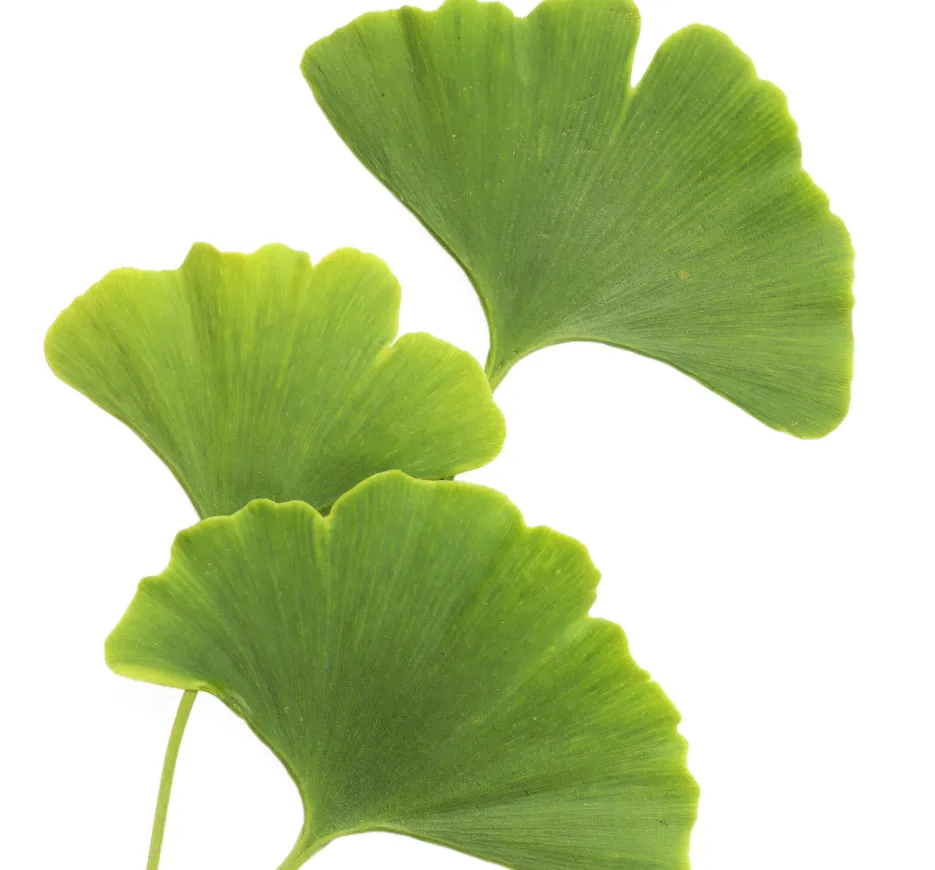
Ginkgo biloba, derived from the leaves of the ginkgo tree, is a popular herbal supplement known for its potential cognitive and circulatory benefits. Rich in flavonoids and terpenoids, ginkgo is widely studied as a natural remedy for brain health, memory enhancement, and peripheral vascular conditions.


Historically used in traditional medicine, ginkgo biloba is often associated with supporting mental sharpness and reducing age-related cognitive decline. It may also benefit individuals with tinnitus, vertigo, or poor circulation by promoting better oxygen and nutrient delivery to tissues. Its neuroprotective effects make it a topic of interest for
Alzheimer’s disease and dementia research.

Key indications

Coronary Heart Disease

Ginkgo biloba improves blood flow to the brain and extremities, supports vascular health, and helps reduce symptoms like cold hands and feet¹. Study showed individuals with heart disease who took ginkgo showed an immediate boost in blood flow, linked to a 12% rise in nitric oxide levels, which helps dilate blood vessels².

Psychiatric Disorders

Research has explored the potential of ginkgo biloba in treating depression and various psychiatric conditions³,⁴. A small trial with 136 participants suggested that gingko biloba extract, alongside citalopram, improved depressive symptoms, cognitive function, and reduced serum S100B, a marker of brain injury³.

Dementia and Alzheimer Disease

Research suggests that ginkgo may help protect nerve cells damaged in Alzheimer’s disease, with several studies indicating it has a positive impact on memory and cognitive function in individuals with Alzheimer’s or vascular dementia⁵,⁶. A meta-analysis of four trials with 1,628 patients found that ginkgo biloba extract treatment improved both behavioural and psychological symptoms of dementia, as well as caregiver distress linked to these symptoms⁶.

Vertigo

Some studies suggest ginkgo biloba may help improve vertigo symptoms and reduce the occurrence⁷,⁸. A 3-month double-blind trial with 70 patients showed that ginkgo biloba extract reduced the intensity, frequency, and duration of vertigo, with 47% improvement in the extract of ginkgo biloba group versus 18% in the placebo group⁷.

Macular Degeneration

Ginkgo biloba improves blood flow, blocks platelet activation, and prevents free radical damage, which may help with age-related macular degeneration (AMD). A systematic review showed that two trials found that ginkgo biloba had positive effects on vision and may help prevent or reduce retinal issues associated with age-related macular degeneration (AMD)⁹.

Adverse effects

Ginkgo biloba is generally safe and well-tolerated, with a suggested daily limit of 240mg¹⁰. Mild side effects may include headaches, heart palpitations, digestive issues, constipation, and allergic skin reactions. While studies show no significant effect on blood clotting measures, there have been reports linking ginkgo to bleeding events, including severe intracranial bleeding¹¹.

Dosage range

There is no standard dosage for ginkgo biloba supplements, and the dosage may vary depending on the condition being treated.


    Coronary Heart Disease:
    A daily dose of 120mg of ginkgo biloba extract showed improved coronary artery circulation in patients with coronary artery disease².


    Psychiatric Disorders:
    Studies showed positive feedback, with ginkgo biloba extract improving symptoms in elderly patients with depression (120mg daily) and individuals with schizophrenia and tardive dyskinesia (240mg daily), both over a 12-week period³,⁴.


    Dementia and Alzheimer Disease:
    A study showed that 240mg daily of ginkgo biloba extract was more effective than placebo in improving overall symptoms and caregiver distress for patients with dementia⁶.


    Vertigo:
    A 12-week study combining 80mg of extract gingko biloba twice daily with 10 days of individualised balance training and vibrotactile neurofeedback showed significant improvements in age-related vertigo and dizziness, with a strong safety profile⁸.


    Macular Degeneration:
    A systematic review found that dosages of ginkgo biloba extract ranged from 60mg to 240mg daily, with treatment duration of six months and 24 weeks, respectively showed beneficial outcomes including improvements in distance and near visual acuity, visual field, and disease progression, all assessed at the end of the treatment periods¹⁰.

Contraindications/cautions

There are several precautions to consider when using ginkgo in specific conditions:


  • Bleeding disorders & blood thinners: Ginkgo may increase bleeding risk, especially when combined with NSAIDs, antiplatelet drugs, or anticoagulants. A case report noted spontaneous bleeding in an elderly patient who took both aspirin and ginkgo¹².
  • Warfarin: Combining ginkgo with warfarin may heighten the risk of bleeding events, as shown in a 2015 study with veterans¹³.
  • Surgery: It’s advised to stop ginkgo at least 36 hours before planned surgery due to potential perioperative risks¹⁴.
  • Pregnancy & breastfeeding: There is insufficient evidence on ginkgo’s safety in pregnant or breastfeeding women¹⁵.
  • Seizures: Ginkgo may lower the seizure threshold, so caution is necessary in epileptic patients or those prone to seizures¹⁶.

Adverse effects

Ginkgo biloba is generally safe and well-tolerated, with a suggested daily limit of 240mg¹⁰. Mild side effects may include headaches, heart palpitations, digestive issues, constipation, and allergic skin reactions. While studies show no significant effect on blood clotting measures, there have been reports linking ginkgo to bleeding events, including severe intracranial bleeding¹¹.

Dosage range

There is no standard dosage for ginkgo biloba supplements, and the dosage may vary depending on the condition being treated.


    Coronary Heart Disease:
    A daily dose of 120mg of ginkgo biloba extract showed improved coronary artery circulation in patients with coronary artery disease².


    Psychiatric Disorders:
    Studies showed positive feedback, with ginkgo biloba extract improving symptoms in elderly patients with depression (120mg daily) and individuals with schizophrenia and tardive dyskinesia (240mg daily), both over a 12-week period³,⁴.


    Dementia and Alzheimer Disease:
    A study showed that 240mg daily of ginkgo biloba extract was more effective than placebo in improving overall symptoms and caregiver distress for patients with dementia⁶.


    Vertigo:
    A 12-week study combining 80mg of extract gingko biloba twice daily with 10 days of individualised balance training and vibrotactile neurofeedback showed significant improvements in age-related vertigo and dizziness, with a strong safety profile⁸.


    Macular Degeneration:
    A systematic review found that dosages of ginkgo biloba extract ranged from 60mg to 240mg daily, with treatment duration of six months and 24 weeks, respectively showed beneficial outcomes including improvements in distance and near visual acuity, visual field, and disease progression, all assessed at the end of the treatment periods¹⁰.

Contraindications/cautions

There are several precautions to consider when using ginkgo in specific conditions:


  • Bleeding disorders & blood thinners: Ginkgo may increase bleeding risk, especially when combined with NSAIDs, antiplatelet drugs, or anticoagulants. A case report noted spontaneous bleeding in an elderly patient who took both aspirin and ginkgo¹².
  • Warfarin: Combining ginkgo with warfarin may heighten the risk of bleeding events, as shown in a 2015 study with veterans¹³.
  • Surgery: It’s advised to stop ginkgo at least 36 hours before planned surgery due to potential perioperative risks¹⁴.
  • Pregnancy & breastfeeding: There is insufficient evidence on ginkgo’s safety in pregnant or breastfeeding women¹⁵.
  • Seizures: Ginkgo may lower the seizure threshold, so caution is necessary in epileptic patients or those prone to seizures¹⁶.

References :

  1. Hill, A. (2024, September 27). Ginkgo biloba possible benefits and risks. Healthline. https://www.healthline.com/nutrition/ginkgo-biloba-benefits#circulation-and-hearth-health
  2. Wu, Y. Z., Li, S. Q., Zu, X. G., Du, J., & Wang, F. F. (2008). Ginkgo biloba extract improves coronary artery circulation in patients with coronary artery disease: contribution of plasma nitric oxide and endothelin-1. Phytotherapy research : PTR, 22(6), 734–739. https://doi.org/10.1002/ptr.2335
  3. Dai, C. X., Hu, C. C., Shang, Y. S., & Xie, J. (2018). Role of Ginkgo biloba extract as an adjunctive treatment of elderly patients with depression and on the expression of serum S100B. Medicine, 97(39), e12421.
  4. Zhang, W. F., Tan, Y. L., Zhang, X. Y., Chan, R. C., Wu, H. R., & Zhou, D. F. (2010). Extract of Ginkgo biloba treatment for tardive dyskinesia in schizophrenia: a randomized, double-blind, placebo-controlled trial. The Journal of clinical psychiatry, 71(5),7051.
  5. Janßen, I. M., Sturtz, S., Skipka, G., Zentner, A., & Busse, R. (2010). Ginkgo biloba in Alzheimer’s disease: a systematic review. Wiener Medizinische Wochenschrift (1946), 160(21-22), 539-546.
    6. Savaskan, E., Mueller, H., Hoerr, R., von Gunten, A., & Gauthier, S. (2018). Treatment effects of Ginkgo biloba extract EGb 761® on the spectrum of behavioral and psychological symptoms of dementia: meta-analysis of randomized controlled trials. International psychogeriatrics, 30(3), 285-293.
  6. Haguenauer, J. P., Cantenot, F., Koskas, H., & Pierart, H. (1986). Treatment of equilibrium disorders with Ginkgo biloba extract. A multicenter double-blind drug vs. placebo study. Presse Medicale (Paris, France: 1983), 15(31), 1569-1572.
  7. Heide, W., Adlung, B., Körtke, C., & Hoerr, R. (2022). Ginkgo biloba extract EGb 761® improves central vestibular vertigo in patients undergoing vestibular exercises: a randomised placebo-controlled trial. Neuroscience and Medicine, 13(03), 91-102.
  8. Evans J. R. (2013). Ginkgo biloba extract for age-related macular degeneration. The Cochrane database of systematic reviews, 2013(1), CD001775. https://doi.org/10.1002/14651858.CD001775.pub2
    10. Unger, M. (2013). Pharmacokinetic drug interactions involving Ginkgo biloba. Drug Metabolism Reviews, 45(3), 353-385.
  9. Kellermann, A. J., & Kloft, C. (2011). Is There a Risk of Bleeding Associated with Standardized Ginkgo bilobaExtract Therapy? A Systematic Review and Meta‐analysis. Pharmacotherapy: The Journal of Human Pharmacology and Drug Therapy, 31(5), 490-502.
  10. Rosenblatt, M., & Mindel, J. (1997). Spontaneous hyphema associated with ingestion of Ginkgo biloba extract. New England Journal of Medicine, 336(15), 1108-1108.
  11. Stoddard, G. J., Archer, M., Shane-McWhorter, L., Bray, B. E., Redd, D. F., Proulx, J., & Zeng-Treitler, Q. (2015). Ginkgo and warfarin interaction in a large veterans administration population. In AMIA Annual Symposium Proceedings (Vol. 2015, p. 1174). American Medical Informatics Association.
  12. Ang-Lee, M. K., Moss, J., & Yuan, C. S. (2001). Herbal medicines and perioperative care. Jama, 286(2), 208-216.
  13. Nguyen, T., & Alzahrani, T. (2023). Ginkgo biloba. In StatPearls [Internet]. StatPearls Publishing.
  14. Harms, S. L., Garrard, J., Schwinghammer, P., Eberly, L. E., Chang, Y., & Leppik, I. E. (2006). Ginkgo biloba use in nursing home elderly with epilepsy or seizure disorder. Epilepsia, 47(2), 323-329.

References :

  1. Hill, A. (2024, September 27). Ginkgo biloba possible benefits and risks. Healthline. https://www.healthline.com/nutrition/ginkgo-biloba-benefits#circulation-and-hearth-health
  2. Wu, Y. Z., Li, S. Q., Zu, X. G., Du, J., & Wang, F. F. (2008). Ginkgo biloba extract improves coronary artery circulation in patients with coronary artery disease: contribution of plasma nitric oxide and endothelin-1. Phytotherapy research : PTR, 22(6), 734–739. https://doi.org/10.1002/ptr.2335
  3. Dai, C. X., Hu, C. C., Shang, Y. S., & Xie, J. (2018). Role of Ginkgo biloba extract as an adjunctive treatment of elderly patients with depression and on the expression of serum S100B. Medicine, 97(39), e12421.
  4. Zhang, W. F., Tan, Y. L., Zhang, X. Y., Chan, R. C., Wu, H. R., & Zhou, D. F. (2010). Extract of Ginkgo biloba treatment for tardive dyskinesia in schizophrenia: a randomized, double-blind, placebo-controlled trial. The Journal of clinical psychiatry, 71(5),7051.
  5. Janßen, I. M., Sturtz, S., Skipka, G., Zentner, A., & Busse, R. (2010). Ginkgo biloba in Alzheimer’s disease: a systematic review. Wiener Medizinische Wochenschrift (1946), 160(21-22), 539-546.
    6. Savaskan, E., Mueller, H., Hoerr, R., von Gunten, A., & Gauthier, S. (2018). Treatment effects of Ginkgo biloba extract EGb 761® on the spectrum of behavioral and psychological symptoms of dementia: meta-analysis of randomized controlled trials. International psychogeriatrics, 30(3), 285-293.
  6. Haguenauer, J. P., Cantenot, F., Koskas, H., & Pierart, H. (1986). Treatment of equilibrium disorders with Ginkgo biloba extract. A multicenter double-blind drug vs. placebo study. Presse Medicale (Paris, France: 1983), 15(31), 1569-1572.
  7. Heide, W., Adlung, B., Körtke, C., & Hoerr, R. (2022). Ginkgo biloba extract EGb 761® improves central vestibular vertigo in patients undergoing vestibular exercises: a randomised placebo-controlled trial. Neuroscience and Medicine, 13(03), 91-102.
  8. Evans J. R. (2013). Ginkgo biloba extract for age-related macular degeneration. The Cochrane database of systematic reviews, 2013(1), CD001775. https://doi.org/10.1002/14651858.CD001775.pub2
    10. Unger, M. (2013). Pharmacokinetic drug interactions involving Ginkgo biloba. Drug Metabolism Reviews, 45(3), 353-385.
  9. Kellermann, A. J., & Kloft, C. (2011). Is There a Risk of Bleeding Associated with Standardized Ginkgo bilobaExtract Therapy? A Systematic Review and Meta‐analysis. Pharmacotherapy: The Journal of Human Pharmacology and Drug Therapy, 31(5), 490-502.
  10. Rosenblatt, M., & Mindel, J. (1997). Spontaneous hyphema associated with ingestion of Ginkgo biloba extract. New England Journal of Medicine, 336(15), 1108-1108.
  11. Stoddard, G. J., Archer, M., Shane-McWhorter, L., Bray, B. E., Redd, D. F., Proulx, J., & Zeng-Treitler, Q. (2015). Ginkgo and warfarin interaction in a large veterans administration population. In AMIA Annual Symposium Proceedings (Vol. 2015, p. 1174). American Medical Informatics Association.
  12. Ang-Lee, M. K., Moss, J., & Yuan, C. S. (2001). Herbal medicines and perioperative care. Jama, 286(2), 208-216.
  13. Nguyen, T., & Alzahrani, T. (2023). Ginkgo biloba. In StatPearls [Internet]. StatPearls Publishing.
  14. Harms, S. L., Garrard, J., Schwinghammer, P., Eberly, L. E., Chang, Y., & Leppik, I. E. (2006). Ginkgo biloba use in nursing home elderly with epilepsy or seizure disorder. Epilepsia, 47(2), 323-329.

The material is prepared for informational purposes only and should not be construed as a piece of personal medical advice. Owing to each person’s varying health needs, a physician should be consulted before acting on any information provided in this material. Although every effort is made to ensure that this material is accurate, it is compiled for internal use only and should not be considered definitive. Neither VitaHealth nor its employees, or information providers shall be responsible or liable for any errors, inaccuracies, or other defects in the information contained in this publication.

You might also be interested in

Ginkgo Biloba

Ginkgo biloba, derived from the leaves of the ginkgo tree, is a popular herbal supplement known for its potential cognitive and circulatory benefits. Rich in

READ MORE

Flaxseed Oil

Flaxseed oil is a plant-based oil extracted from the seeds of the flax plant, Linum usitatissimum, and is widely used in dietary supplements for its

READ MORE
My Cart
Close Wishlist
Close Recently Viewed
Categories