Ingredients A-Z

Bromelain

Overview

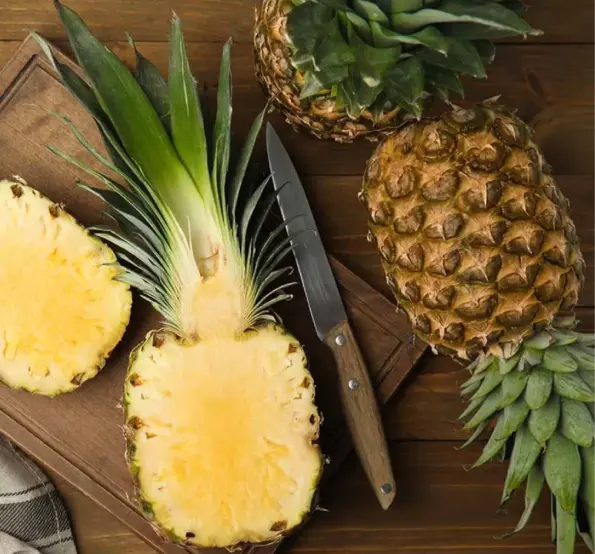
Bromelain is a group of proteolytic enzymes found in the fruit and stem of the pineapple plant. Proteolytic enzymes help to digest the proteins in food. They also help to reduce inflammation by breaking down proteins involved in swellings and pain. Historically, bromelain was used by natives of Central and South America for a variety of health concerns, such as digestive disorders.


Bromelain is usually used for reducing chronic inflammations such as allergies, osteoarthritis, sinusitis, and ulcerative colitis as well as pain and swelling of the nose, gums, and other body parts after surgery or injury. Although bromelain is extracted from pineapple, generally, it is not enough to just eat pineapple or drink its juice to supply effective dose.

Key indications

Knee pain

It has been shown that taking oral bromelain for 30 days can help to reduce mild and acute knee pain. Comparatively, 400mg is more effective than 200mg in improving stiffness, pain and physical function of the knee, the symptoms reductions are 59% and 41% respectively¹.

Osteoarthritis

Clinical study shows that bromelain has anti-inflammatory properties which exert therapeutic effects on osteoarthritis (OA) and rheumatoid arthritis (RA)². Besides that, bromelain-containing products help to reduce pain and improve function in knee osteoarthritis³,⁴.

Postoperative pain

Clinical study shows that taking bromelain after wisdom tooth extraction can reduce pain for up to 8 days compared to placebo⁵,⁶. By taking oral bromelain 40-250mg every 6 hours for 4-6 days can help to reduce dental pain and swelling, the effect is similar to that of taking 100mg ketoprofen twice daily or 25mg diclofenac sodium four times daily⁷,⁸.

Rhinosinusitis

Bromelain can help in short-term and long-term reduction of symptoms of acute and chronic sinusitis, these symptoms include nasal mucosal inflammation and oedema⁹,¹⁰,¹¹,¹². As an adjunct to antibiotics, oral bromelain at 40mg four times daily for 6 days can be used⁹,¹¹,¹². Usually, bromelain can be used in combination with decongestants, antihistamines, and/or antibiotics.

Knee pain

It has been shown that taking oral bromelain for 30 days can help to reduce mild and acute knee pain. Comparatively, 400mg is more effective than 200mg in improving stiffness, pain and physical function of the knee, the symptoms reductions are 59% and 41% respectively¹.

Osteoarthritis

Clinical study shows that bromelain has anti-inflammatory properties which exert therapeutic effects on osteoarthritis (OA) and rheumatoid arthritis (RA)². Besides that, bromelain-containing products help to reduce pain and improve function in knee osteoarthritis³,⁴.

Postoperative pain

Clinical study shows that taking bromelain after wisdom tooth extraction can reduce pain for up to 8 days compared to placebo⁵,⁶. By taking oral bromelain 40-250mg every 6 hours for 4-6 days can help to reduce dental pain and swelling, the effect is similar to that of taking 100mg ketoprofen twice daily or 25mg diclofenac sodium four times daily⁷,⁸.

Rhinosinusitis

Bromelain can help in short-term and long-term reduction of symptoms of acute and chronic sinusitis, these symptoms include nasal mucosal inflammation and oedema⁹,¹⁰,¹¹,¹². As an adjunct to antibiotics, oral bromelain at 40mg four times daily for 6 days can be used⁹,¹¹,¹². Usually, bromelain can be used in combination with decongestants, antihistamines, and/or antibiotics.

Adverse effects

Bromelain is generally well tolerated. However, some of the most common adverse effects are diarrhoea, nausea, vomiting, abdominal pain and gastric upset¹³,¹⁴.

Dosage range

Bromelain can be used at a range of doses between 40mg to 400mg daily¹⁷.

Contraindications/cautions

  • Anticoagulant or antiplatelet drugs
    Bromelain might interact with these medications and lead to increased risk of bleeding if both are being used concurrently due to the possible antiplatelet effects of bromelain¹⁵,¹⁶.
  •  

  • Hypersensitivity
    People who are allergic to pineapple should avoid bromelain.

Adverse effects

Bromelain is generally well tolerated. However, some of the most common adverse effects are diarrhoea, nausea, vomiting, abdominal pain and gastric upset¹³,¹⁴.

Dosage range

Bromelain can be used at a range of doses between 40mg to 400mg daily¹⁷.

Contraindications/cautions

  • Anticoagulant or antiplatelet drugs
    Bromelain might interact with these medications and lead to increased risk of bleeding if both are being used concurrently due to the possible antiplatelet effects of bromelain¹⁵,¹⁶.
  •  

  • Hypersensitivity
    People who are allergic to pineapple should avoid bromelain.

References :

  1. Walker, A. F., Bundy, R., Hicks, S. M., & Middleton, R. W. (2002). Bromelain reduces mild acute knee pain and improves well-being in a dose-dependent fashion in an open study of otherwise healthy adults. Phytomedicine : international journal of phytotherapy and phytopharmacology, 9(8), 681–686. https://doi.org/10.1078/094471102321621269
  2. Pothacharoen, P., Chaiwongsa, R., Chanmee, T., Insuan, O., Wongwichai, T., Janchai, P., & Vaithanomsat, P. (2021). Bromelain Extract Exerts Antiarthritic Effects via Chondroprotection and the Suppression of TNF-α–Induced NF-κB and MAPK Signaling. Plants, 10(11), 2273. https://doi.org/10.3390/plants10112273
  3. Bolten, W. W., Glade, M. J., Raum, S., & Ritz, B. W. (2015). The safety and efficacy of an enzyme combination in managing knee osteoarthritis pain in adults: a randomized, double-blind, placebo-controlled trial. Arthritis, 2015, 251521. https://doi.org/10.1155/2015/251521
  4. Conrozier, T., Mathieu, P., Bonjean, M., Marc, J. F., Renevier, J. L., & Balblanc, J. C. (2014). A complex of three natural anti-inflammatory agents provides relief of osteoarthritis pain. Alternative therapies in health and medicine, 20 Suppl 1, 32–37.
  5. Mendes, M. L., do Nascimento-Júnior, E. M., Reinheimer, D. M., & Martins-Filho, P. R. (2019). Efficacy of proteolytic enzyme bromelain on health outcomes after third molar surgery. Systematic review and meta-analysis of randomized clinical trials. Medicina oral, patologia oral y cirugia bucal, 24(1), e61–e69. https://doi.org/10.4317/medoral.22731
  6. de Souza, G. M., Fernandes, I. A., Dos Santos, C., & Falci, S. (2019). Is bromelain effective in controlling the inflammatory parameters of pain, edema, and trismus after lower third molar surgery? A systematic review and meta-analysis. Phytotherapy research : PTR, 33(3), 473–481. https://doi.org/10.1002/ptr.6244
  7. Majid, O. W., & Al-Mashhadani, B. A. (2014). Perioperative bromelain reduces pain and swelling and improves quality of life measures after mandibular third molar surgery: a randomized, double-blind, placebo-controlled clinical trial. Journal of oral and maxillofacial surgery : official journal of the American Association of Oral and Maxillofacial Surgeons, 72(6), 1043–1048. https://doi.org/10.1016/j.joms.2013.12.035
  8. Inchingolo, F., Tatullo, M., Marrelli, M., Inchingolo, A. M., Picciariello, V., Inchingolo, A. D., Dipalma, G., Vermesan, D., & Cagiano, R. (2010). Clinical trial with bromelain in third molar exodontia. European review for medical and pharmacological sciences, 14(9), 771–774.
  9. Ryan R. E. (1967). A double-blind clinical evaluation of bromelains in the treatment of acute sinusitis. Headache, 7(1), 13–17. https://doi.org/10.1111/j.1526-4610.1967.hed0701013.x
  10. Taub S. J. (1967). The use of bromelains in sinusitis: a double-blind clinical evaluation. Eye, ear, nose & throat monthly, 46(3).
  11. Seltzer A. P. (1967). Adjunctive use of bromelains in sinusitis: a controlled study. Eye, ear, nose & throat monthly, 46(10), 1281–1288.
  12. Taub S. J. (1966). The use of Ananase in sinusitis. A study of 60 patients. Eye, ear, nose & throat monthly, 45(6)
  13. Kasemsuk, T., Saengpetch, N., Sibmooh, N., & Unchern, S. (2016). Improved WOMAC score following 16-week treatment with bromelain for knee osteoarthritis. Clinical rheumatology, 35(10), 2531–2540. https://doi.org/10.1007/s10067-016-3363-1
  14. Mori, S., Ojima, Y., Hirose, T., Sasaki, T., & Hashimoto, Y. (1972). The clinical effect of proteolytic enzyme containing bromelain and trypsin on urinary tract infection evaluated by double blind method. Acta obstetrica et gynaecologica Japonica, 19(3), 147–153.
  15. Bush, T. M., Rayburn, K. S., Holloway, S. W., Sanchez-Yamamoto, D. S., Allen, B. L., Lam, T., So, B. K., Tran, d., Greyber, E. R., Kantor, S., & Roth, L. W. (2007). Adverse interactions between herbal and dietary substances and prescription medications: a clinical survey. Alternative therapies in health and medicine, 13(2), 30–35.
  16. Heinicke, R. M., van der Wal, L., & Yokoyama, M. (1972). Effect of bromelain (Ananase) on human platelet aggregation. Experientia, 28(7), 844–845. https://doi.org/10.1007/BF01923166
  17. BROMELAIN: Overview, Uses, Side Effects, Precautions, Interactions, Dosing and Reviews. Webmd.com. (2022). Retrieved 11 April 2022, from https://www.webmd.com/vitamins/ai/ingredientmono-895/bromelain.

References :

  1. Walker, A. F., Bundy, R., Hicks, S. M., & Middleton, R. W. (2002). Bromelain reduces mild acute knee pain and improves well-being in a dose-dependent fashion in an open study of otherwise healthy adults. Phytomedicine : international journal of phytotherapy and phytopharmacology, 9(8), 681–686. https://doi.org/10.1078/094471102321621269
  2. Pothacharoen, P., Chaiwongsa, R., Chanmee, T., Insuan, O., Wongwichai, T., Janchai, P., & Vaithanomsat, P. (2021). Bromelain Extract Exerts Antiarthritic Effects via Chondroprotection and the Suppression of TNF-α–Induced NF-κB and MAPK Signaling. Plants, 10(11), 2273. https://doi.org/10.3390/plants10112273
  3. Bolten, W. W., Glade, M. J., Raum, S., & Ritz, B. W. (2015). The safety and efficacy of an enzyme combination in managing knee osteoarthritis pain in adults: a randomized, double-blind, placebo-controlled trial. Arthritis, 2015, 251521. https://doi.org/10.1155/2015/251521
  4. Conrozier, T., Mathieu, P., Bonjean, M., Marc, J. F., Renevier, J. L., & Balblanc, J. C. (2014). A complex of three natural anti-inflammatory agents provides relief of osteoarthritis pain. Alternative therapies in health and medicine, 20 Suppl 1, 32–37.
  5. Mendes, M. L., do Nascimento-Júnior, E. M., Reinheimer, D. M., & Martins-Filho, P. R. (2019). Efficacy of proteolytic enzyme bromelain on health outcomes after third molar surgery. Systematic review and meta-analysis of randomized clinical trials. Medicina oral, patologia oral y cirugia bucal, 24(1), e61–e69. https://doi.org/10.4317/medoral.22731
  6. de Souza, G. M., Fernandes, I. A., Dos Santos, C., & Falci, S. (2019). Is bromelain effective in controlling the inflammatory parameters of pain, edema, and trismus after lower third molar surgery? A systematic review and meta-analysis. Phytotherapy research : PTR, 33(3), 473–481. https://doi.org/10.1002/ptr.6244
  7. Majid, O. W., & Al-Mashhadani, B. A. (2014). Perioperative bromelain reduces pain and swelling and improves quality of life measures after mandibular third molar surgery: a randomized, double-blind, placebo-controlled clinical trial. Journal of oral and maxillofacial surgery : official journal of the American Association of Oral and Maxillofacial Surgeons, 72(6), 1043–1048. https://doi.org/10.1016/j.joms.2013.12.035
  8. Inchingolo, F., Tatullo, M., Marrelli, M., Inchingolo, A. M., Picciariello, V., Inchingolo, A. D., Dipalma, G., Vermesan, D., & Cagiano, R. (2010). Clinical trial with bromelain in third molar exodontia. European review for medical and pharmacological sciences, 14(9), 771–774.
  9. Ryan R. E. (1967). A double-blind clinical evaluation of bromelains in the treatment of acute sinusitis. Headache, 7(1), 13–17. https://doi.org/10.1111/j.1526-4610.1967.hed0701013.x
  10. Taub S. J. (1967). The use of bromelains in sinusitis: a double-blind clinical evaluation. Eye, ear, nose & throat monthly, 46(3).
  11. Seltzer A. P. (1967). Adjunctive use of bromelains in sinusitis: a controlled study. Eye, ear, nose & throat monthly, 46(10), 1281–1288.
  12. Taub S. J. (1966). The use of Ananase in sinusitis. A study of 60 patients. Eye, ear, nose & throat monthly, 45(6)
  13. Kasemsuk, T., Saengpetch, N., Sibmooh, N., & Unchern, S. (2016). Improved WOMAC score following 16-week treatment with bromelain for knee osteoarthritis. Clinical rheumatology, 35(10), 2531–2540. https://doi.org/10.1007/s10067-016-3363-1
  14. Mori, S., Ojima, Y., Hirose, T., Sasaki, T., & Hashimoto, Y. (1972). The clinical effect of proteolytic enzyme containing bromelain and trypsin on urinary tract infection evaluated by double blind method. Acta obstetrica et gynaecologica Japonica, 19(3), 147–153.
  15. Bush, T. M., Rayburn, K. S., Holloway, S. W., Sanchez-Yamamoto, D. S., Allen, B. L., Lam, T., So, B. K., Tran, d., Greyber, E. R., Kantor, S., & Roth, L. W. (2007). Adverse interactions between herbal and dietary substances and prescription medications: a clinical survey. Alternative therapies in health and medicine, 13(2), 30–35.
  16. Heinicke, R. M., van der Wal, L., & Yokoyama, M. (1972). Effect of bromelain (Ananase) on human platelet aggregation. Experientia, 28(7), 844–845. https://doi.org/10.1007/BF01923166
  17. BROMELAIN: Overview, Uses, Side Effects, Precautions, Interactions, Dosing and Reviews. Webmd.com. (2022). Retrieved 11 April 2022, from https://www.webmd.com/vitamins/ai/ingredientmono-895/bromelain.

The material is prepared for informational purposes only and should not be construed as a piece of personal medical advice. Owing to each person’s varying health needs, a physician should be consulted before acting on any information provided in this material. Although every effort is made to ensure that this material is accurate, it is compiled for internal use only and should not be considered definitive. Neither VitaHealth nor its employees, or information providers shall be responsible or liable for any errors, inaccuracies, or other defects in the information contained in this publication.

You might also be interested in

Passion Flower

Passion flower, or known as Passiflora incarnata, is a climbing vine with white and purple flowers that is native to the south-eastern United States, and

READ MORE

Calcium Fructoborate

Boron, a trace mineral first discovered present in plant cell walls in 1857. Boron does not store in most body tissues; however, high levels of

READ MORE
My Cart
Close Wishlist
Close Recently Viewed
Categories