Health A-Z
Constipation
Overview
- Constipation is both a symptom and, when chronic, a multisymptomatic disorder, and it can overlap with other gastrointestinal tract disorders such as dyspepsia and gastroesophageal reflux disease².
- Constipation most commonly refers to infrequent bowel movements. It is defined as having a bowel movement less than 3 times per week³.
- Chronic constipation is difficult and/or rare passage of stools that lasts for several months that can interfere people’s ability to go about their daily activities. It may also cause people to strain excessively to have bowel movement⁴.
Symptoms and Signs

Stool inconsistency⁵

Bloating⁵

Urge for defaecation⁵

Feelings of incomplete emptying after a bowel movement⁵

Straining⁵

Hard and lumpy stools⁵

Abdominal discomforts⁵
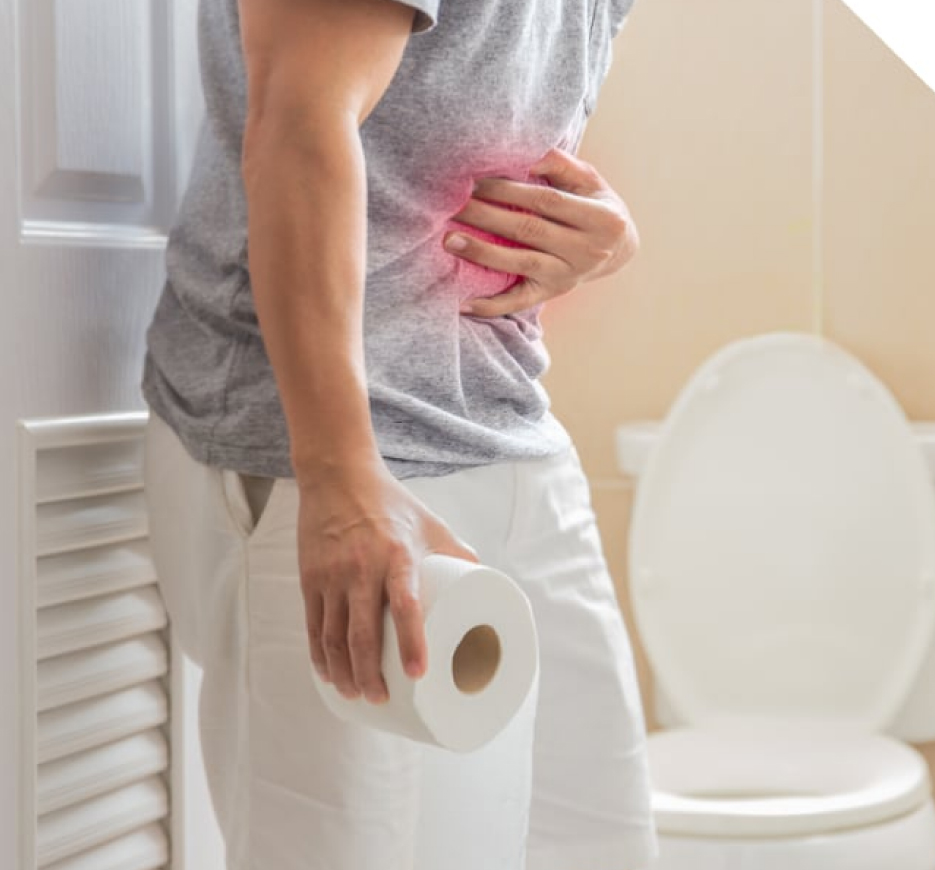
Signs and Symptoms

Stool inconsistency⁵

Straining⁵

Bloating⁵

Hard and lumpy stools⁵

Urge for defaecation⁵

Abdominal discomforts⁵

Feelings of incomplete emptying after a bowel movement⁵
Causes and risk factors
- Low fibre intake
- Insufficient hydration
- Reduced mobility
- Medications
- Pelvic floor dysfunction
- Slow colon transit time
Causes and risk factors
- Low fibre intake
- Insufficient hydration
- Reduced mobility
- Medications
- Pelvic floor dysfunction
- Slow colon transit time
Supplement recommendations
Probiotics
Mechanism of action
Benefits
Constipation
Gastrointestinal health
Recommended dosage
There is currently no established effective probiotic dosage because it can be affected by species, dose and duration of therapy depending on the clinical indication. The concentration of single strain bacteria is recommended to be >1 billion CFU to ensure effectiveness unless with clinical support¹⁴.
Magnesium
Mechanism of action
Magnesium salts increase the osmotic pressure of the intestinal lumen fluid, thereby promoting the transfer of water to the intestinal lumen and increasing the water content and volume of the stool. In addition, the swollen stool stimulates the intestinal wall and intestinal propulsive motor activity¹⁵.
Benefits
Constipation
Magnesium is known to cause relaxation of the muscles lining the colon walls, which allows for smoother wall contractions. These smoother wall contractions allow for effective pushing of stool. Magnesium also attracts water into the colon making stool softer and easier to pass. In a crosssectional study of 3835 female Japanese students aged 18 to 20 years, constipation was not associated with low fiber or low water intake from foods but was
associated with a low intake of magnesium¹⁶.
Recommended dosage
Recommended dietary allowances (RDAs) for magnesium¹⁷

Konjac
Mechanism of action
Like other forms of dietary fiber, konjac glucomannan is considered a “bulk-forming laxative.” Glucomannan promotes a larger, bulkier stool that passes through the colon more easily, requiring less pressure and subsequently less straining to expel¹⁸.
Benefits
Constipation
Studies shown that glucomannan may provide relief in constipation through the improvement of probiotic bacteria counts in faeces (colonicecology) after daily supplementation of 1.5g of konjac glucomannan for 21 days. Bowel movement function was increased by 30%¹⁹. The mean defecation frequency and dry faecal mass increased due to the presence of plant and soluble materials from supplementation of konjac glucomannan²⁰.
Inflammatory bowel disease (IBD)
Daily consumption of konjac glucomannan hydrolysates was shown to enhance capacity to bind pathogens and prevent this from binding the gut’s lining, stimulating topical healing, regulating immunity and ability to form systemic immune responses among healthy people with IBD and associated gut conditions. It is function as soluble dietary fibre as well as prebiotic²¹.
Recommended dosage²²
Konjac is normally added to foods as a thickening agent and dietary fiber source. Typical doses used as treatment by adults is ranging from 3g to 4g daily for up to 3 months.
Supplement recommendations 1
Probiotics
Mechanism of action
Benefits
Constipation
Gastrointestinal health
Recommended dosage
There is currently no established effective probiotic dosage because it can be affected by species, dose and duration of therapy depending on the clinical indication. The concentration of single strain bacteria is recommended to be >1 billion CFU to ensure effectiveness unless with clinical support¹⁴.
Supplement recommendations 2
Probiotics
Mechanism of action
Benefits
Constipation
Gastrointestinal health
Recommended dosage
There is currently no established effective probiotic dosage because it can be affected by species, dose and duration of therapy depending on the clinical indication. The concentration of single strain bacteria is recommended to be >1 billion CFU to ensure effectiveness unless with clinical support¹⁴.
Supplement recommendations
Magnesium
Mechanism of action
Magnesium salts increase the osmotic pressure of the intestinal lumen fluid, thereby promoting the transfer of water to the intestinal lumen and increasing the water content and volume of the stool. In addition, the swollen stool stimulates the intestinal wall and intestinal propulsive motor activity¹⁵.
Benefits
Constipation
Magnesium is known to cause relaxation of the muscles lining the colon walls, which allows for smoother wall contractions. These smoother wall contractions allow for effective pushing of stool. Magnesium also attracts water into the colon making stool softer and easier to pass. In a crosssectional study of 3835 female Japanese students aged 18 to 20 years, constipation was not associated with low fiber or low water intake from foods but was
associated with a low intake of magnesium¹⁶.
Recommended dosage
Recommended dietary allowances (RDAs) for magnesium¹⁷

Supplement recommendations
Konjac
Mechanism of action
Like other forms of dietary fiber, konjac glucomannan is considered a “bulk-forming laxative.” Glucomannan promotes a larger, bulkier stool that passes through the colon more easily, requiring less pressure and subsequently less straining to expel¹⁸.
Benefits
Constipation
Studies shown that glucomannan may provide relief in constipation through the improvement of probiotic bacteria counts in faeces (colonicecology) after daily supplementation of 1.5g of konjac glucomannan for 21 days. Bowel movement function was increased by 30%¹⁹. The mean defecation frequency and dry faecal mass increased due to the presence of plant and soluble materials from supplementation of konjac glucomannan²⁰.
Inflammatory bowel disease (IBD)
Daily consumption of konjac glucomannan hydrolysates was shown to enhance capacity to bind pathogens and prevent this from binding the gut’s lining, stimulating topical healing, regulating immunity and ability to form systemic immune responses among healthy people with IBD and associated gut conditions. It is function as soluble dietary fibre as well as prebiotic²¹.
Recommended dosage²²
Konjac is normally added to foods as a thickening agent and dietary fiber source. Typical doses used as treatment by adults is ranging from 3g to 4g daily for up to 3 months.
Diet & lifestyle recommendations
- Higher dietary fibre intake (fruits, legumes, and vegetables)²³
- Drink plenty of fluid²³
- Exercise²⁴
- Do not ignore the urge to pass stool²⁴
- Create a regular schedule for bowel movements, especially after a meal²⁴
References :
- Maria Vazquez Roque, Ernest P Bouras. (2015). Epidemiology and management of chronic constipation in elderly patients. Clin Interv Aging, 919–930.
- Amy E. Foxx-Orenstein, Meredythe A. McNally, Suwebatu T. Odunsi. (2018). Update on constipation: One treatment does not fit all. Cleveland Clinic Journal of Medicine , 813-824.
- National Institute of Diabetes and Digestive and Kidney Diseases. (2013). Constipation. National Institute of Diabetes and Digestive and Kidney Diseases.
- Mayo Clinic. (2023). Constipation. Retrieved from https://www.mayoclinic.org/diseasesconditions/ constipation/symptoms-causes/syc-20354253
- J. F. Johanson, J. Kralstein. (2007). Chronic constipation: a survey of the patient perspective. USA: Blackwell Publishing Ltd.
- Lawrence Leung, Taylor Riutta, Jyoti Kotecha, Walter Rosser . (2011). Chronic Constipation: An Evidence-Based Review. Journal of the American Board of Family Medicine, 437-451.
- Schulz, C., Koch, N., Schütte, K., Pieper, D. H., & Malfertheiner, P. (2015). H. pylori and its modulation of gastrointestinal microbiota. Journal of digestive diseases, 16(3), 109–117. https://doi.org/10.1111/1751-2980.12233
- Puram, S., Suh, H. C., Kim, S. U., Bethapudi, B., Joseph, J. A., Agarwal, A., & Kudiganti, V. (2013). Effect of GutGard in the Management of Helicobacter pylori: A Randomized Double Blind Placebo Controlled Study. Evidence-based complementary and alternative medicine : eCAM, 2013, 263805. https://doi.org/10.1155/2013/263805
- Weinland, S. R., & Drossman, D. A. (2013). Psychological factors and treatments in irritable bowel syndrome. Irritable Bowel Syndrome, 183-213. https://doi.org/10.1002/9781118444689.ch10
- Jayasimhan, S., Yap, N.Y., Roest, Y., et al. (2013). Efficacy of microbial cell preparation in improving chronic constipation: A randomized, double-blind, placebo-controlled trial. Clinical Nutrition, 32: 928-934. http://dx.doi.org/10.1016/j.clnu.2013.03.004
- Yan, F., & Polk, D. B. (2011). Probiotics and immune health. Current opinion in gastroenterology, 27(6), 496–501. https://doi.org/10.1097/MOG.0b013e32834baa4d
- Markowiak-Kopeć, P., & Śliżewska, K. (2020). The Effect of Probiotics on the Production of Short-Chain Fatty Acids by Human Intestinal Microbiome. Nutrients, 12(4), 1107. https://doi.org/10.3390/nu12041107
- Didari, T., Mozaffari, S., Nikfar, S. & Abdollahi, M. (2015). Effectiveness of probiotics in irritable bowel syndrome: Updated systematic review with meta-analysis. World Journal of Gastroenterol, 21(10): 3072-3084. https://doi.org/10.3748/wjg.v21.i10.3072
- Braun L, Cohen M. Herbs and Natural supplements. Ebook 4th edition. Chatswood: Elsevier 2015 pp.771-796
- Hideki Mori, Jan Tack, Hidekazu Suzuki . (2021). Magnesium Oxide in Constipation. Nutrients, 421.
- Renea L. Beckstrand, Jann S. Pickens . (2011, April 17). Beneficial Effects of Magnesium Supplementation. Retrieved from https://journals.sagepub.com/doi/full/10.1177/2156587211401746
- National Institute of Health, Office of Dietary Supplements. (2022). Magnesium. Retrieved from https://ods.od.nih.gov/factsheets/Magnesium-HealthProfessional/#en1
- PeachHealth. (2023). Glucomannan. Retrieved from https://www.peacehealth.org/medicaltopics/id/hn-2852001#:~:text=Like%20other%20forms%20of%20dietary,subsequently%20less%20straining%E2%80%94to%20expel.
- Chen, H. L., Cheng, H. C., Wu, W. T., Liu, Y. J., & Liu, S. Y. (2008). Supplementation of konjac glucomannan into a low-fiber Chinese diet promoted bowel movement and improved colonic ecology in constipated adults: a placebo-controlled, diet-controlled trial. Journal of the American College of Nutrition, 27(1), 102–108.https://doi.org/10.1080/07315724.2008.10719681
- Chen, Hsiao-ling & Cheng, Han-Chung & Liu, Yann-Jiu & Liu, Su-Yuan & Wu, Wen-Tze. (2006). Konjac acts as a natural laxative by increasing stool bulk and improving colonic ecology in healthy adults. Nutrition (Burbank, Los Angeles County, Calif.). 22.1112-9. 10.1016/j.nut.2006.08.009
- Suwannaporn, P., Thepwong, K., Tester, R.F., Al-Ghazzewi, F.H., Piggott, J.R., Shen, N., Chen, Z., Chen, F., Yang, J., Zhang, D., & Tang, M. (2013). Tolerance and nutritional therapy of dietary fibre from konjac glucomannan hydrolysates for patients with inflammatory bowel disease (IBD). Bioactive Carbohydrates and Dietary Fibre, 2, 93-98.WebMD LLC. (2022). Glucomannan-uses, side effects, and more. Retrieved from https://www.webmd.com/vitamins/ai/ingredientmono-205/glucomannan Sun Hwan Bae. (2014). Diets for Constipation. Pediatr Gastroenterol Hepatol Nutr, 203-208.
- WebMD LLC. (2022). Glucomannan-uses, side effects, and more. Retrieved from https://www.webmd.com/vitamins/ai/ingredientmono-205/glucomannan
- Sun Hwan Bae. (2014). Diets for Constipation. Pediatr Gastroenterol Hepatol Nutr, 203-208.
- S anjoaquin MA, Appleby PN, Spencer EA, Key TJ. Nutrition and lifestyle in relation to bowel movement frequency: a cross-sectional study of 20 630 men and women in EPIC–Oxford. Pub health Nutr 2004;7(1):77-83
You might also be interested in
- Brain fog is used to describe ‘a usually temporary state of diminished mental capacity marked by inability to concentrate or to think or reason clearly.
- Brain fog is not a formal diagnosis or medical condition but a series of neuropsychologic symptoms related to mild cognitive impairment which may affect daily function.
- Although there are no statistics on the prevalence of brain fog specifically, it was estimated that around 600 million people worldwide suffer from cognitive dysfunction.
- It has been reported that brain fog is one of the most common long COVID symptoms among survivors.³
- The prevalence of GERD in Asia is low, ranging from 2.5% to 7.1% for weekly reflux, 3.8% to 4.6% for twice weekly reflux, and 2.1% for daily reflux, but it might be due to low awareness of the disorde².
- The prevalence of symptom-based GERD in Southeast Asia has been rising³ and was estimated to be 6.3%–18.3% from 2005–2010⁴.
- Left untreated, GERD can result in an esophageal mucosal injury known as reflux esophagitis where persistent backflow of acidic digestive juices will damage the lining of the oesophagus over time⁴.
- Constipation is both a symptom and, when chronic, a multisymptomatic disorder, and it can overlap with other gastrointestinal tract disorders such as dyspepsia and gastroesophageal reflux disease².
- Constipation most commonly refers to infrequent bowel movements. It is defined as having a bowel movement less than 3 times per week³.
- Chronic constipation is difficult and/or rare passage of stools that lasts for several months that can interfere people’s ability to go about their daily activities. It may also cause people to strain excessively to have bowel movement⁴.
- Brain fog is used to describe ‘a usually temporary state of diminished mental capacity marked by inability to concentrate or to think or reason clearly.
- Brain fog is not a formal diagnosis or medical condition but a series of neuropsychologic symptoms related to mild cognitive impairment which may affect daily function.
- Although there are no statistics on the prevalence of brain fog specifically, it was estimated that around 600 million people worldwide suffer from cognitive dysfunction.
- It has been reported that brain fog is one of the most common long COVID symptoms among survivors.³
